
innoviral
P R O D U C T D E S I G N
innoviral
Reducing stress within Australian shared households during COVID-19
TEAM
Sharon Jia, Mietta Reed, Olivia Morley, Eric Doh
CONTEXT
DECO3101 Innovation Design Studio
TOOLS
Figma, Blender, Adobe Illustrator, Adobe After Effects, Adobe Premiere
MY ROLE
Lead Designer, Interaction Design, Visual Design
O V E R V I E W
About the Project
We were tasked with developing a product which would mitigate contagious behaviors in Australia during COVID-19.
In Spring 2020, I decided to pursue design further by studying abroad at the University of Sydney. This was the capstone project for my DECO3101 Innovation Design Studio, an interdisciplinary class exploring the intersection of design and business. As the lead designer on a team of business and design students, I lead the interaction and visual design of our final product.
B A C K G R O U N D
The Problem Space
Due to poor communication between housemates’ daily movements, there is a lack of trust, fear, and even resentment that has been fostering in Australian share-houses during COVID-19.
Housemates are afraid to visit their parents or extended family and friends because they do not know how well their housemates have been following the social distancing guidelines. This holds a serious potential to create a negative environment between housemates. Our team was tasked with designing a way to effectively mitigate contagious behaviors within Australian the COVID-19 pandemic.
D E S I G N O P P O R T U N I T Y
Our Solution
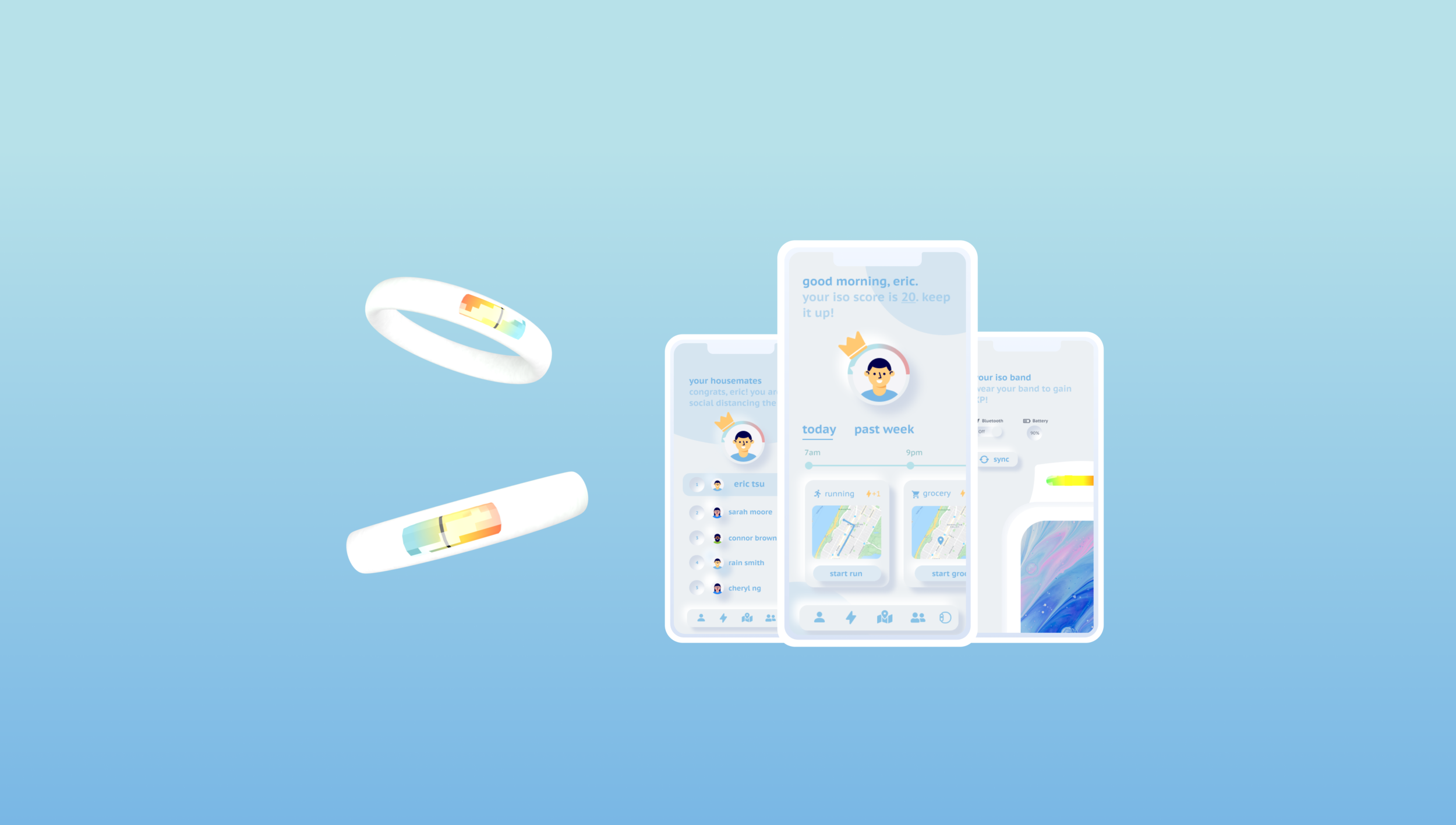
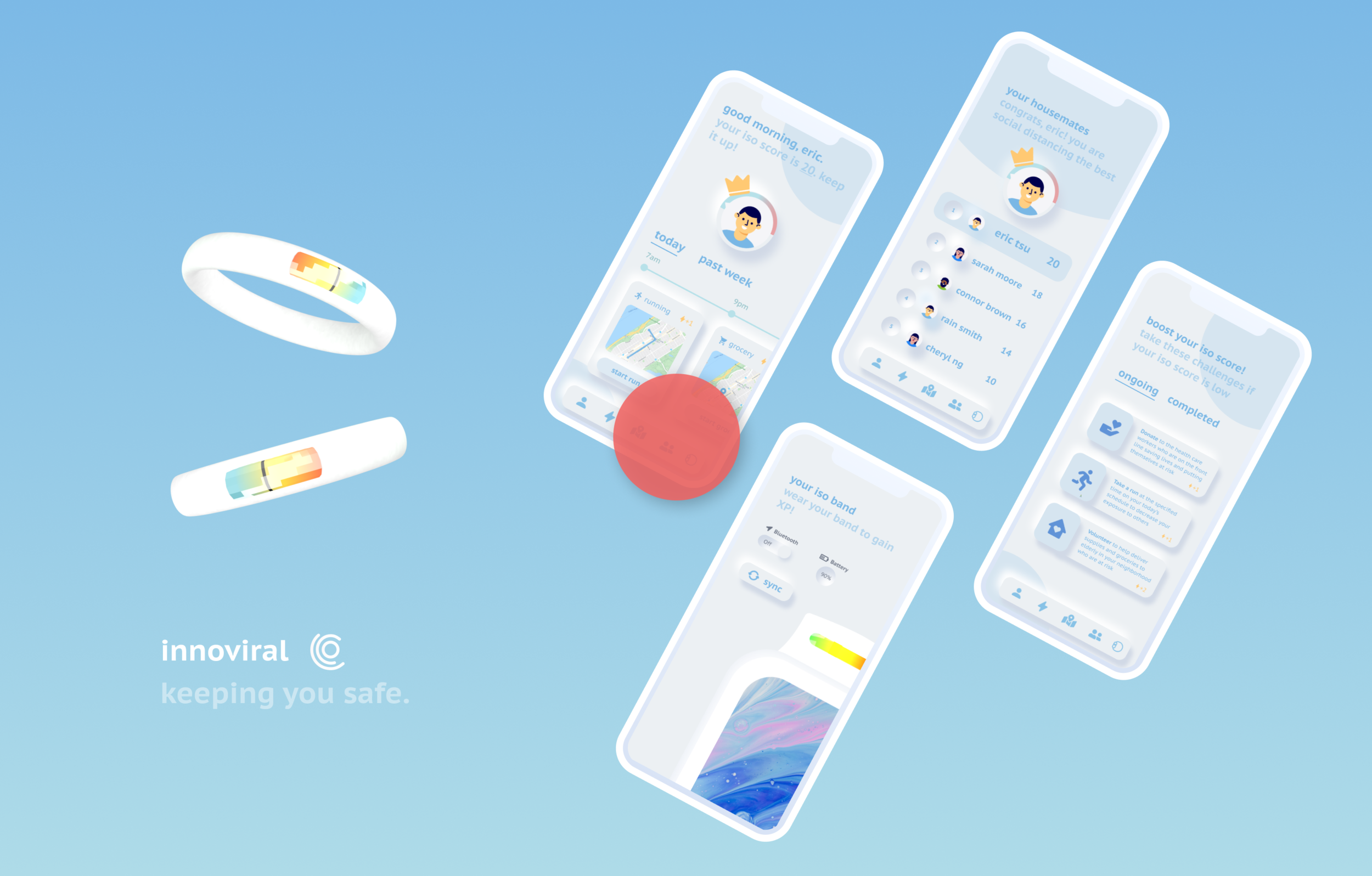
Innoviral is a tech start-up that is determined to reduce the stress within the Australian shared households through a band and mobile app that assists in creating transparency and mitigating contagious behaviors for housemates.
Our app (1) visualizes how well housemates are following the social distancing guidelines through a gamified “Iso Score” and (2) provides a heat density map of how crowded locations are so users can avoid crowds, and thus, transmission of the virus. Through bluetooth tracking technology, we will also be able to track how well our users are social distancing by generating a vibration and visual cue when our user comes within 1.5m distance of another person. Thus, users will be able to mitigate their own contagious behaviors, while simultaneously creating transparency and trust for their housemates.
1. P H Y S I C A L D E V I C E
Iso Band
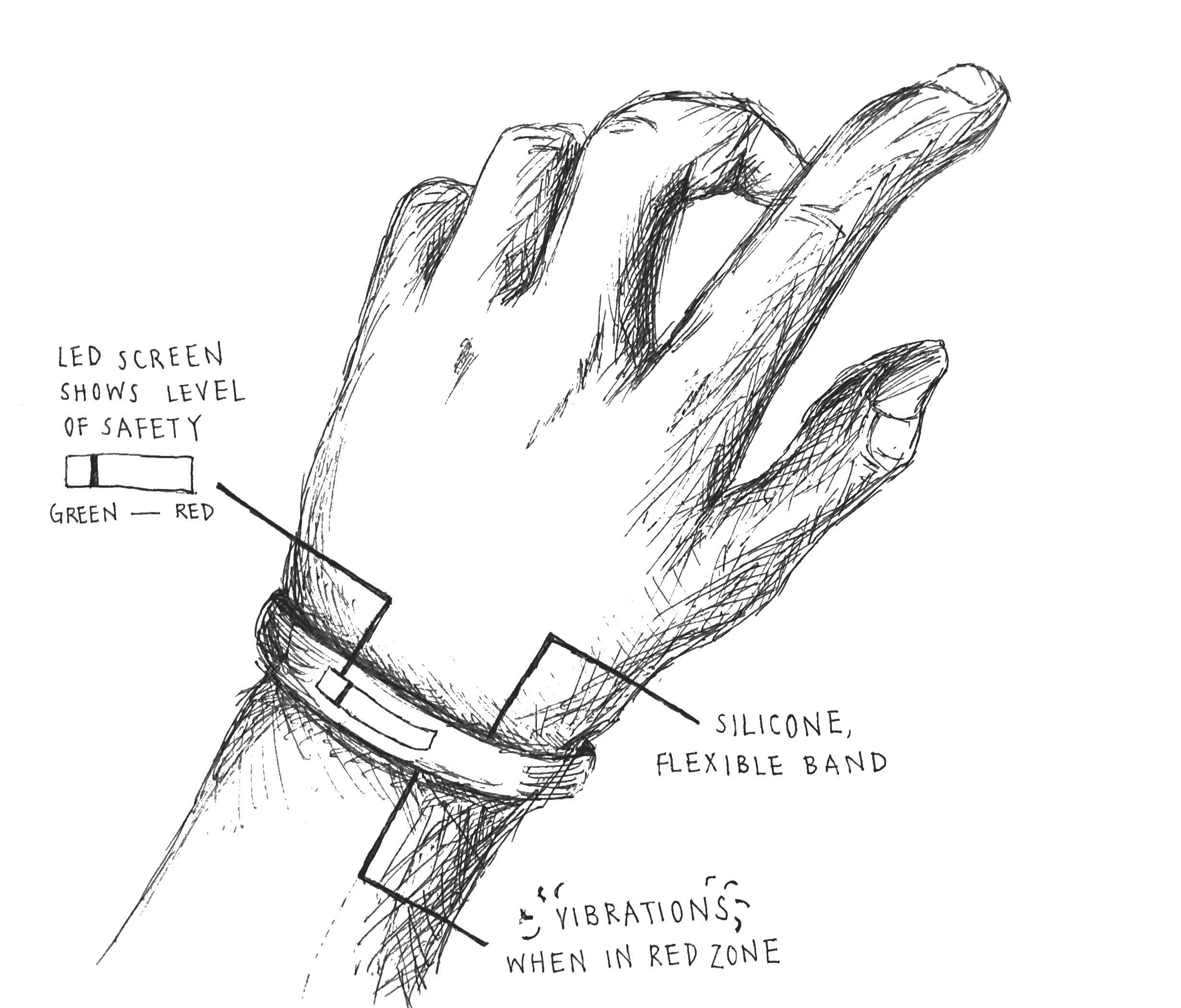
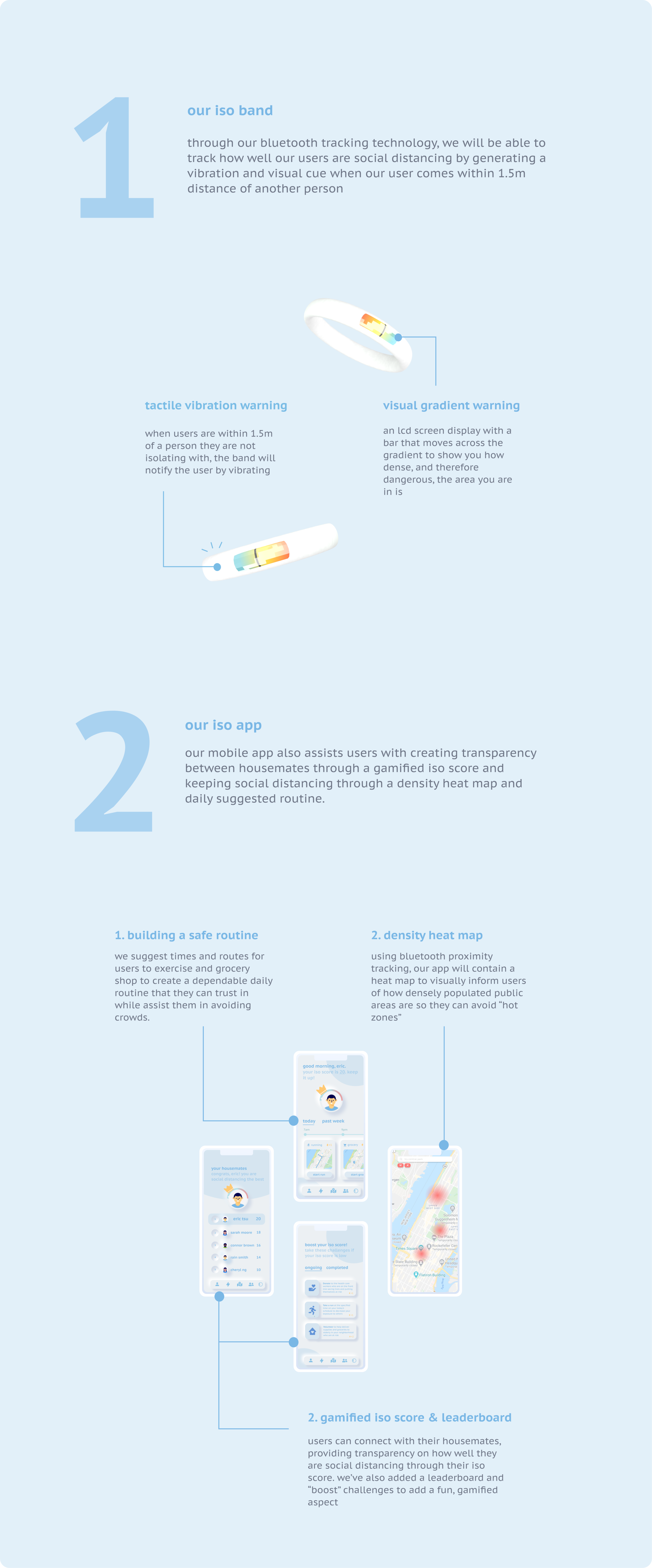
Through our bluetooth tracking technology, we will be able to track how well our users are social distancing by generating a vibration and visual cue when our user comes within 1.5m distance of another person.
2. M O B I L E A P P L I C A T I O N
Iso App
Our mobile app also assists users with creating transparency between housemates through a gamified iso score and keeping social distancing through a density heat map and daily suggested routine.
P R O D U C T P R E V I E W
Concept Video
O U R A P P R O A C H
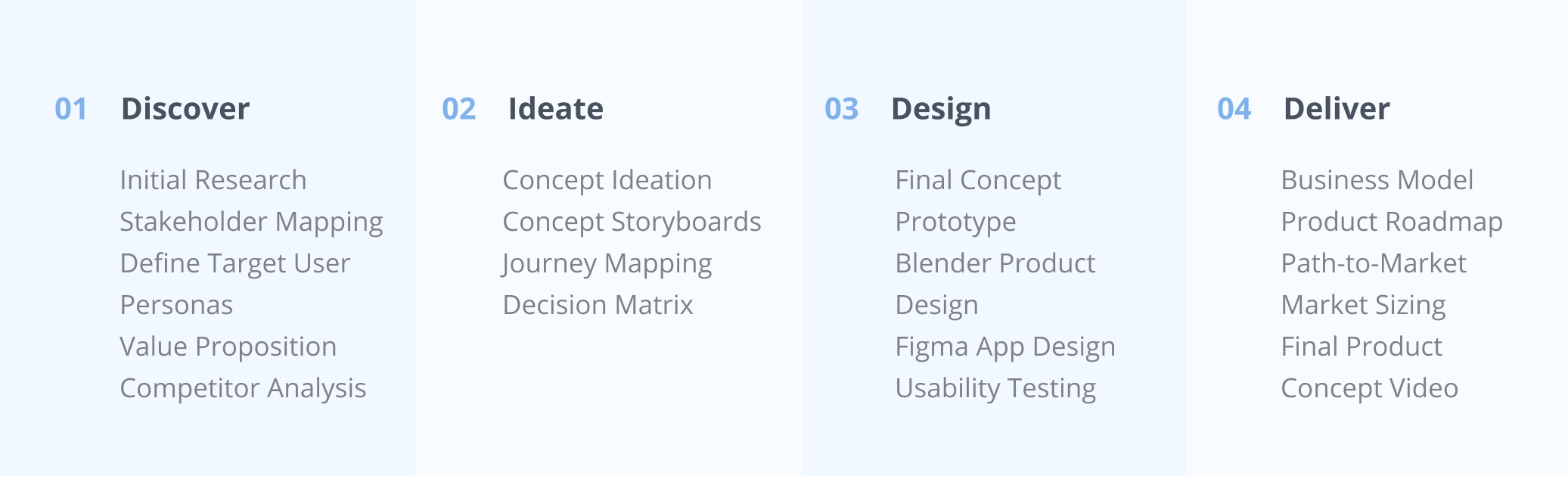
Process
P H A S E I : D I S C O V E R
COVID-19 Background Research
Our company was founded to find a solution that will address the fundamental problems the world population is facing during this worldwide pandemic outbreak. The World Health Organization (2020) has defined COVID-19 as an ‘infectious disease that is spread primarily through droplets of saliva or discharge from the nose when an infected person coughs or sneezes’. Our team is tasked with creating a design solution that will ultimately aid in mitigating contagious behaviors for shared households during the COVID-19 outbreak.
User Research
We created an online survey with 90+ users to gain a better understanding of the concerns, fears, and daily activities of people currently social distancing in Australia.
Our survey reached 90+ users, ranging from university students to nurses to unemployed workers in order to gain a wider understanding of how the COVID-19 situation is affecting a diverse population of people. After collecting our research, we used both qualitative and quantitative methods to better understand and consolidate the key pain points and insights from our users.
Qualitative Research
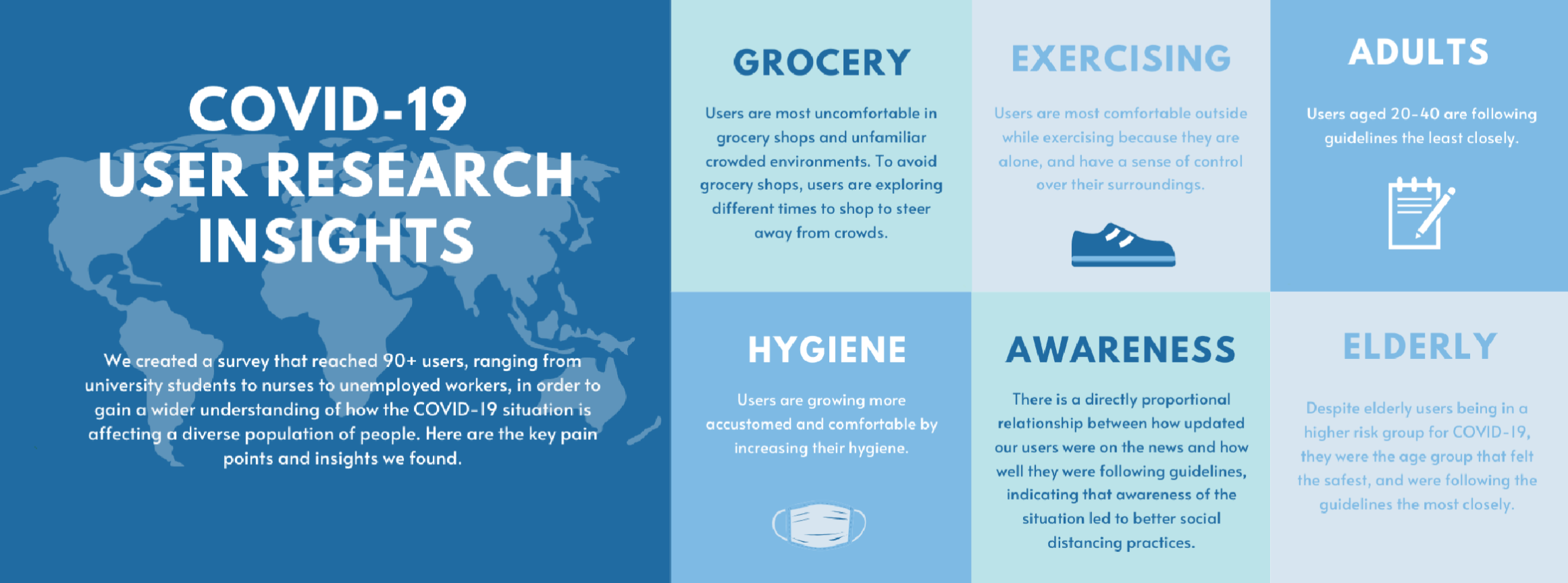
We used affinity diagramming to cluster our qualitative research based on the general insights or patterns. We created an infographic to represent the key trends we discovered in our users current behaviors and needs during COVID-19.
Quantitative Research
In addition to qualitatively analyzing our user research, we also did a quantitative analysis of our responses using Tableau, a data visualization software, to do an exploratory data analysis of our survey. We split our data analysis into two parts (1) to visualize the demographics of our user population and their quarantine activities and (2) to provide insights in the relationships between user emotions and activities to better understand their motivations.
1. To gain a better understanding of the demographics, we created several graphs displaying our users’ current living situations, age groups, and activities during the quarantine.
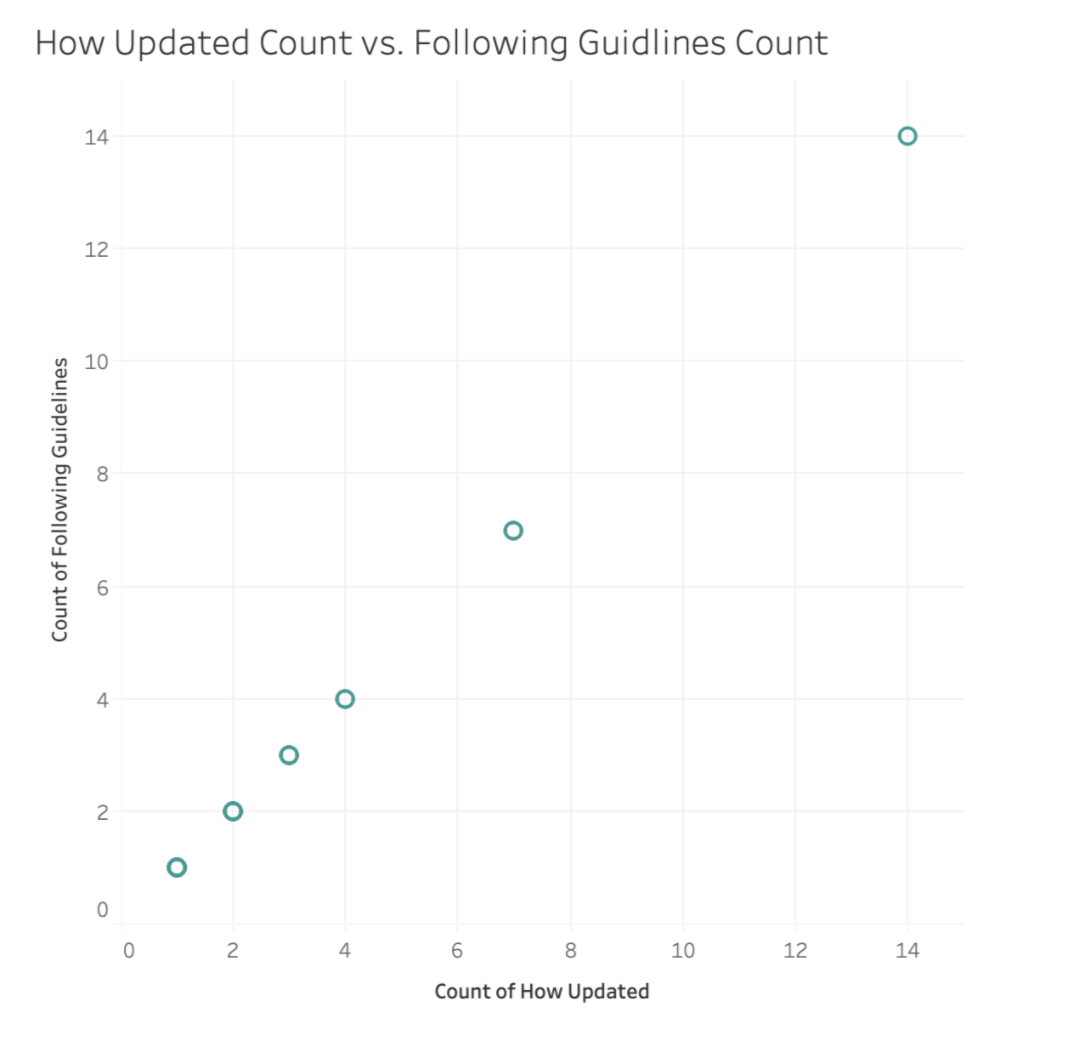
2. There is a directly proportional relationship between how updated our users were on the news and how well they were following guidelines, indicating that awareness of the situation led to better social distancing practices.
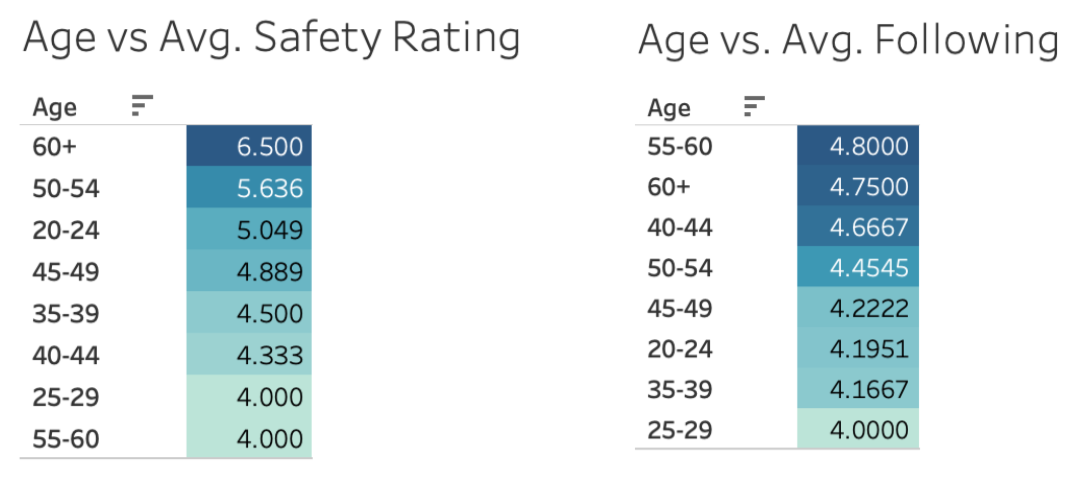
3. Despite elderly users being in a higher risk group for COVID-19, they were the age group that felt the safest, and were following the guidelines the most closely. While all users generally scored a 5/7 on safety ratings, the average safety ratings ranged more largely for those living in families and with partners.
D E F I N I N G O U R U S E R S
Personas
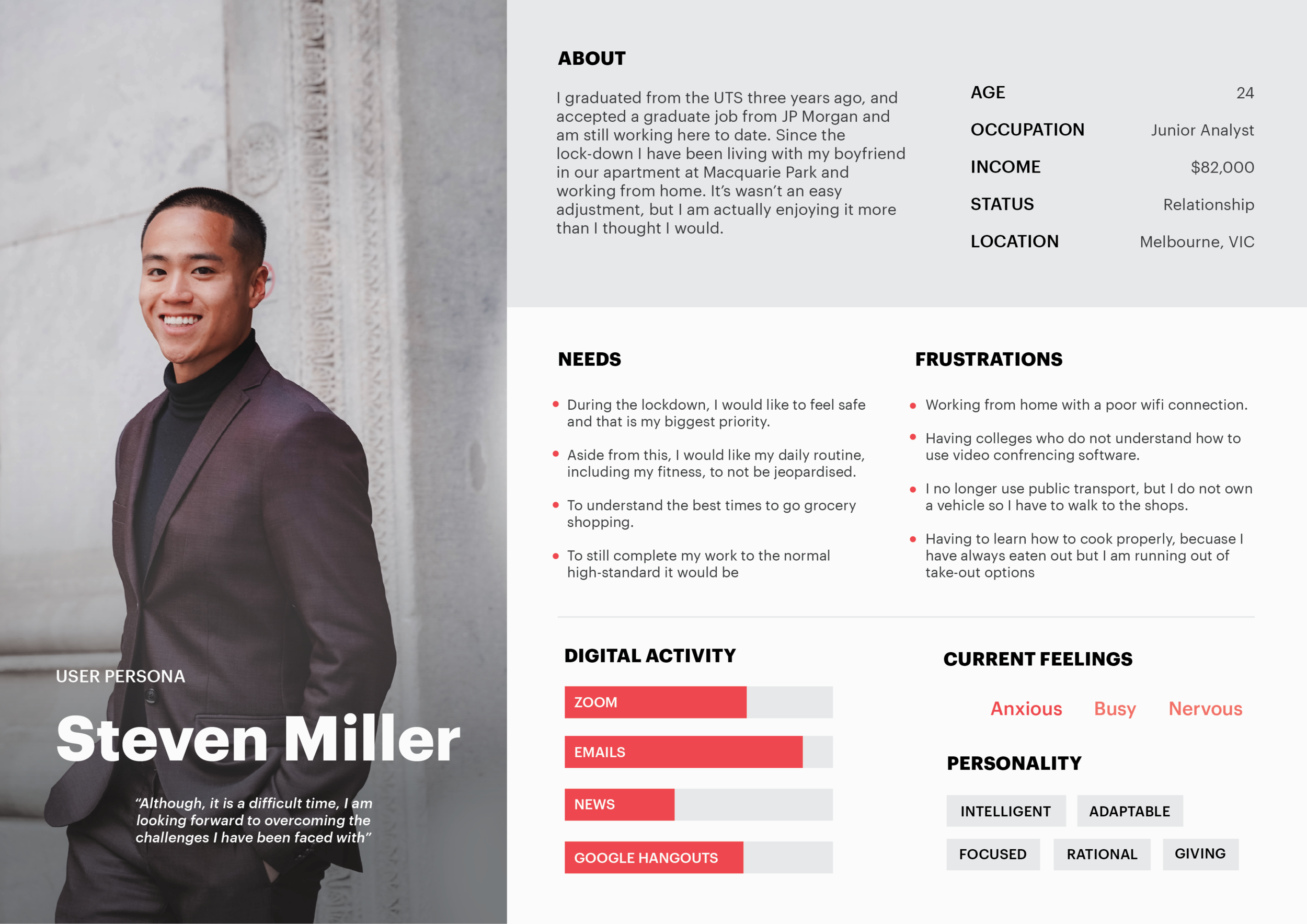
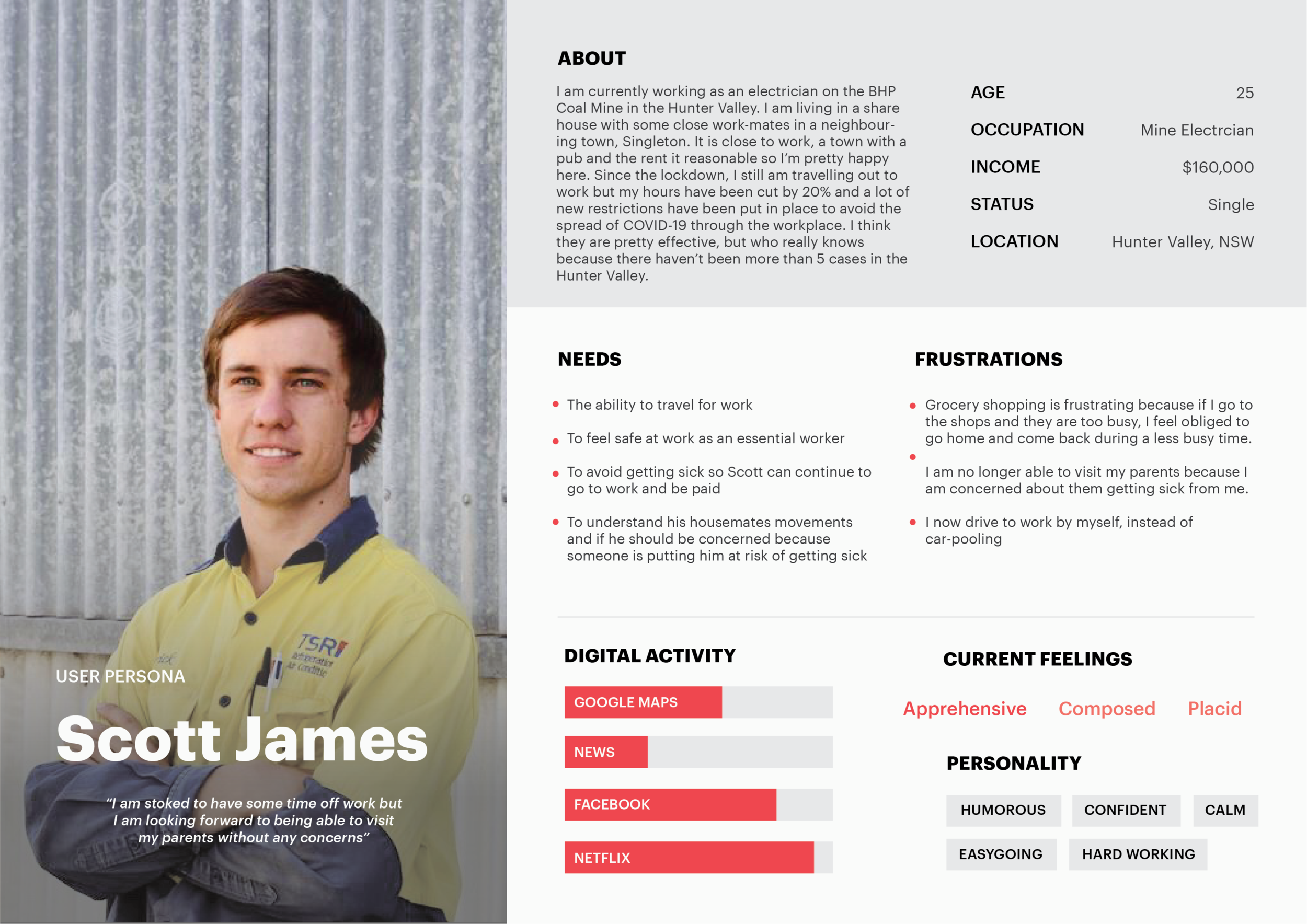
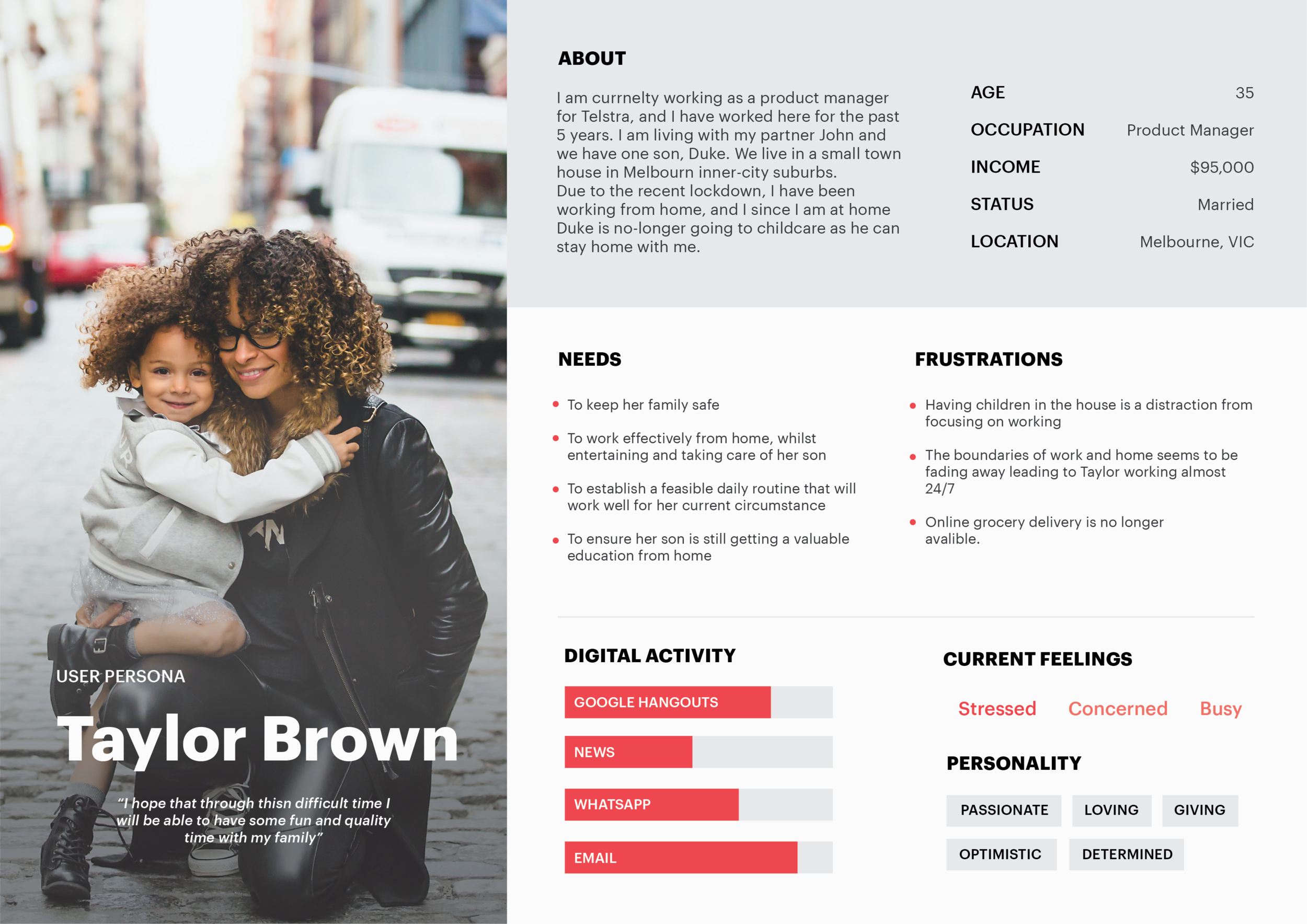
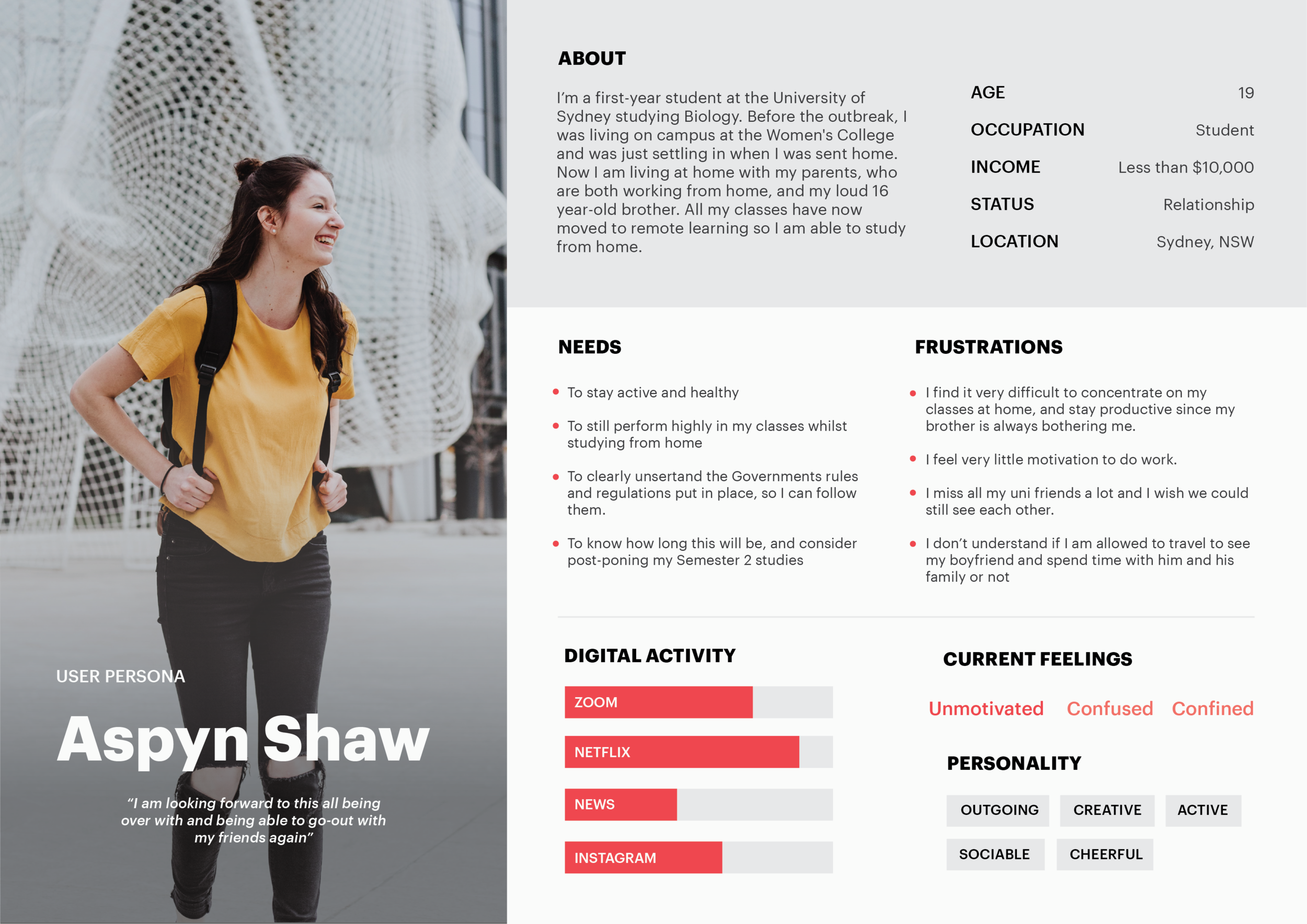
We made a series of four personas in order to represent the different user types from our research that may use our product and to empathize with our users’ needs, frustrations, experiences, behaviors.
Competitive Analysis
After defining our key user group, we did a competitive analysis of current businesses also trying to mitigate contagious behaviors for COVID-19 in order to gain a better understanding of the existing products, and to determine the strengths and weaknesses of our competitors to gain a distinct advantage when designing our own product.
P H A S E I I : I D E A T E
Ideation
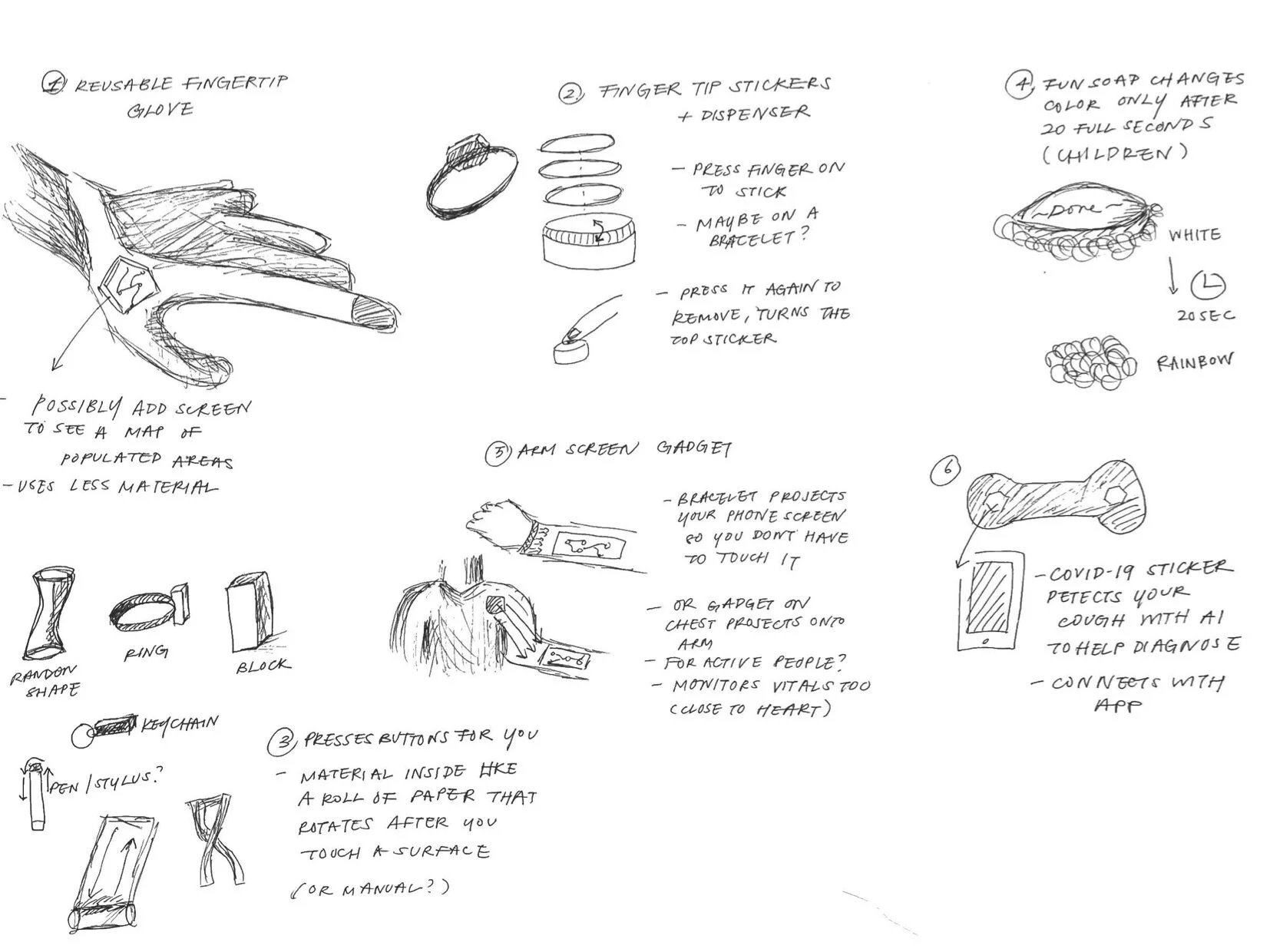
After a thorough understanding of our users and their needs, we began our concept ideation and refinement of our business idea using the Crazy 8’s method.
Decision Matrix
After defining four ideas our team was interested in exploring further, we used a decision matrix to define attributes, weigh them, and appropriately sum the weighted attributes to give a relative ranking among design alternatives. Below are the results of which the criteria to determine which idea would be chosen as our final concept.
P H A S E I I I : D E S I G N
Concept Refinement
After deciding on creating a personal pandemic pal, we went through a concept refinement to identify the key features of our solution and the pain points they were solving. Additionally, we used Figma and Blender to visualize and prototype our app and band ideas.
First Iteration
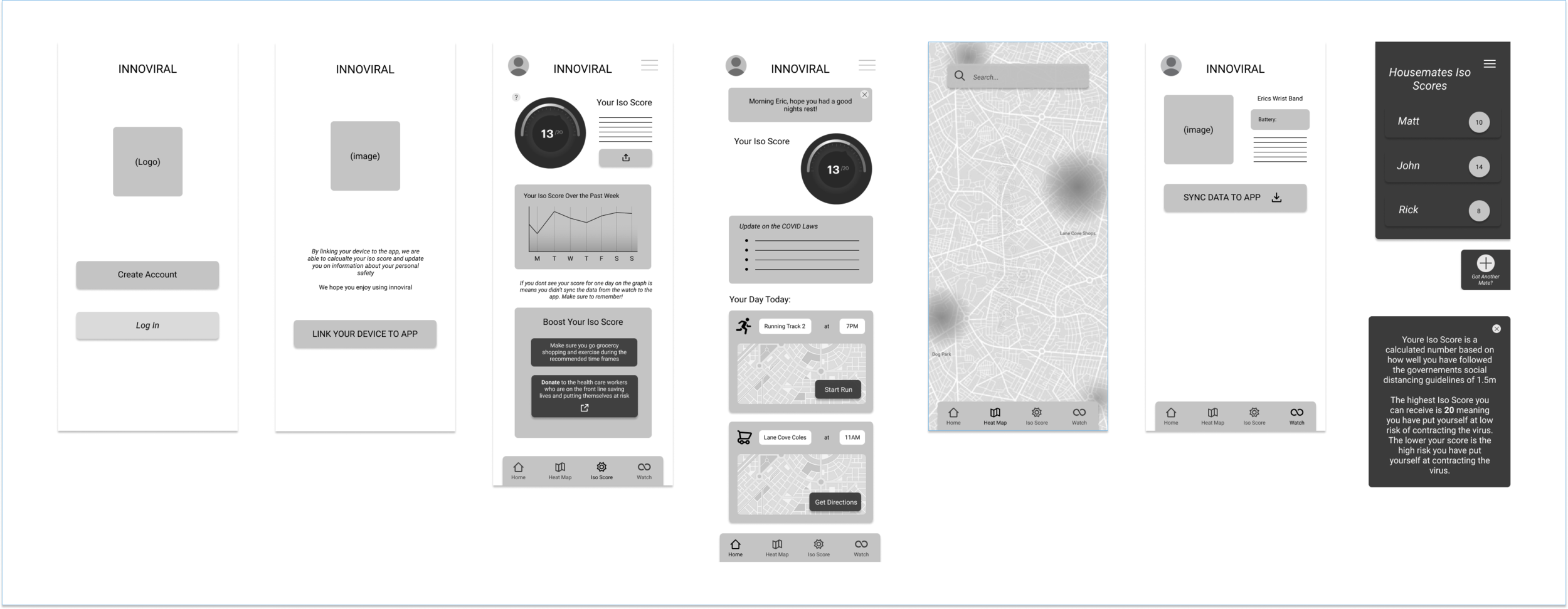
After we gained a better understanding of our user flow through our low fidelity prototype, we started adding color to give a more realistic prototype for our users to gain a better understanding of the look and flow of our application. From doing several user walkthroughs of our low-fidelity app, we found that users were especially drawn to the housemates feature, and thought we could focus on this market segment since there are few companies meeting the pain points of those in shared housing, especially during COVID-19. We decided to take this feedback by designing an entire page showing how well housemates are isolating in a leaderboard.
Second Iteration
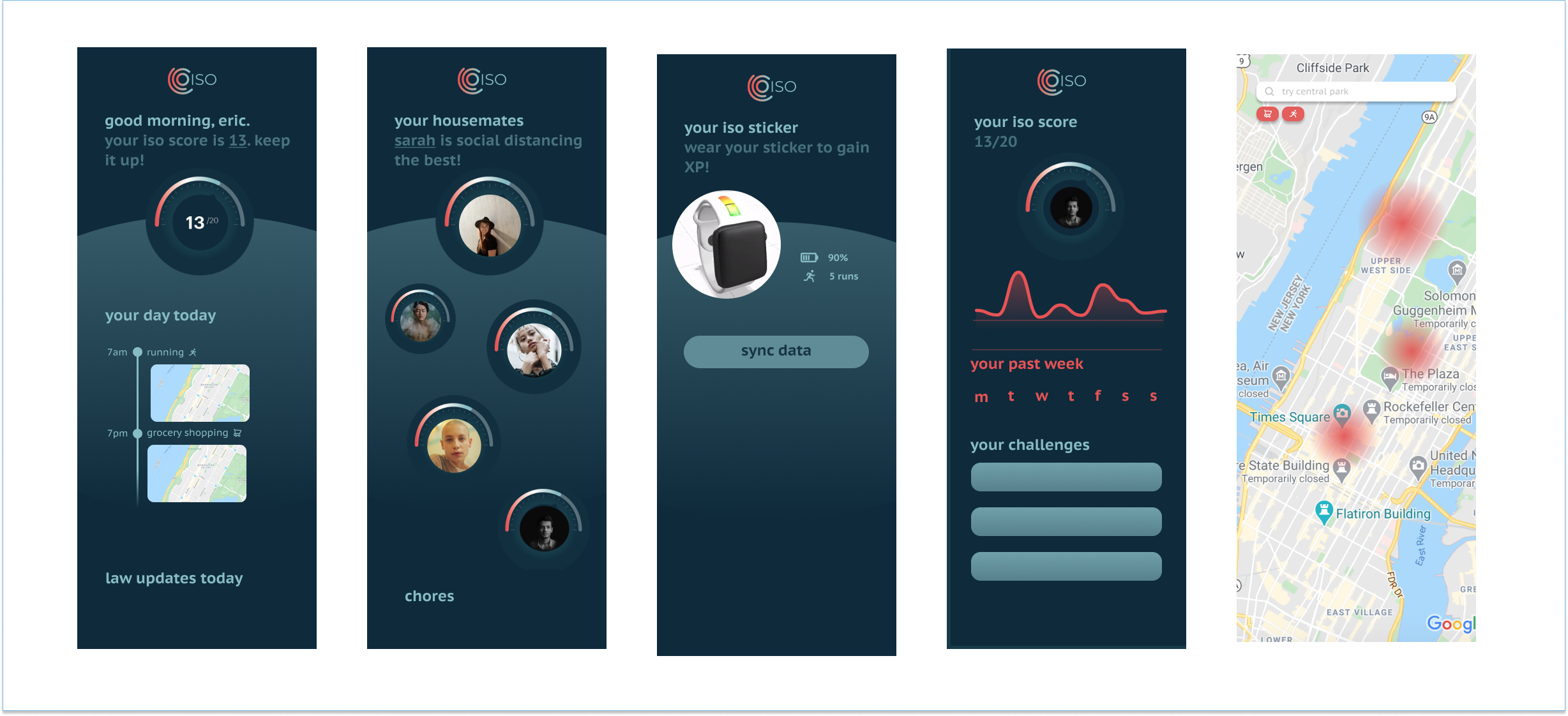
After this iteration, we did another set of user testing. We discovered that users were drawn to the gamification of our app using an “iso score,” but thought it could be even more playful and game-like.
Final Iteration
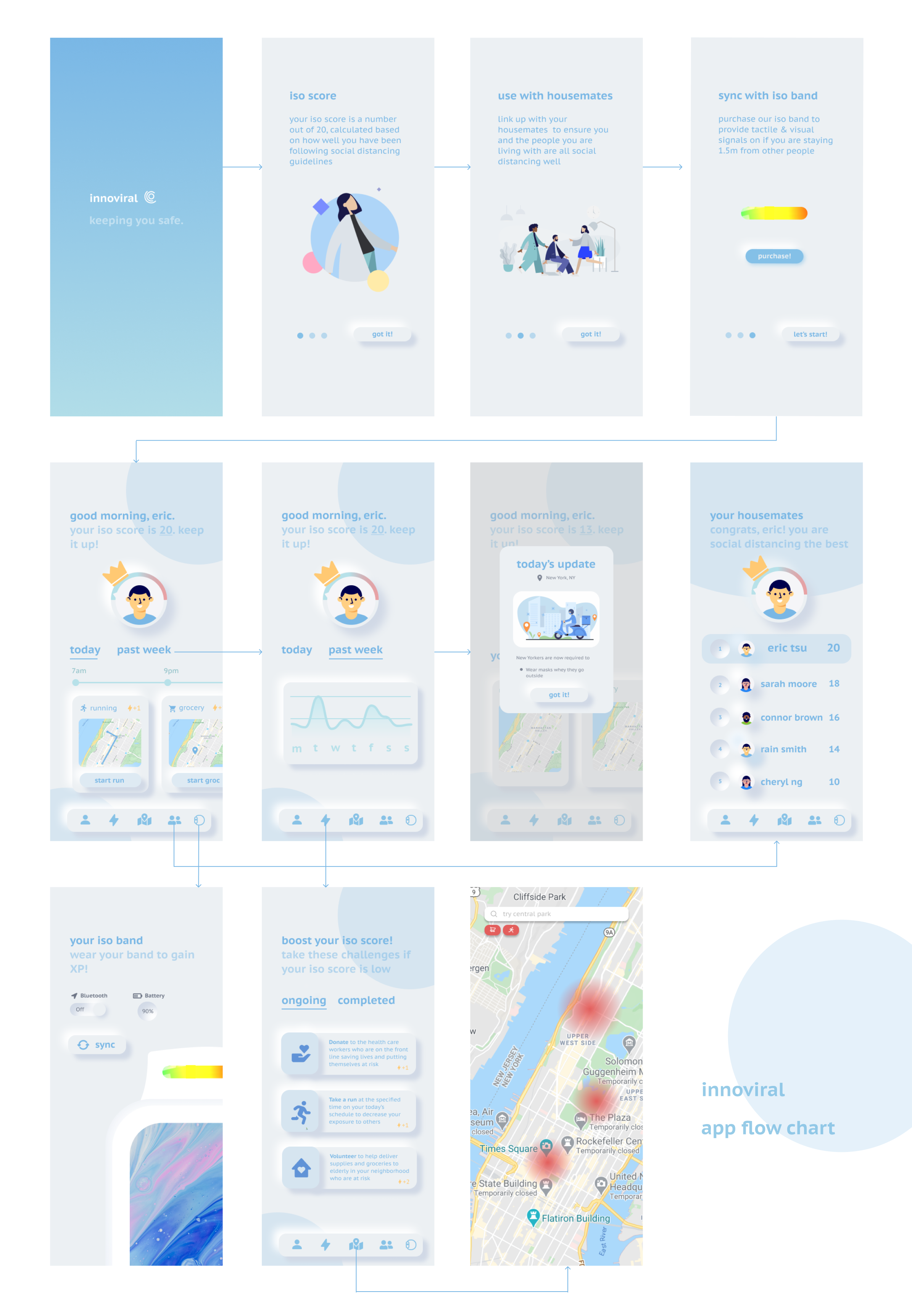
While we had originally chosen our red and teal color palette to provide a more medical feel to our app. However, after considering that most products related to COVID-19 have a more sterile and medical feel, we thought that a more gamified and playful app would draw our users more. As such, we created a new blue color palette that generates feelings of calmness. For our next iteration, we focused on using visual design to create a more playful user interface and add more gamified features.
Final Design
Innoviral is a tech start-up that is determined to reduce the stress within the Australian shared households through a band and mobile app that assists in creating transparency and mitigating contagious behaviors for housemates.
Below we have identified several of the key features of our product, which includes a physical band, as well as an accompanying app.
Thank you for reading this case study about innoviral! ✨