
OVERVIEW
Goldman Sachs’ first rebrand in 40 years
Delivering the excellence of Goldman Sachs through a remarkable digital experience that’s compelling and modern, highlighting the brand as a leader in the financial industry and beyond.
As part of Goldman Sachs' first visual rebrand in four decades, our team reimagined the firm's digital ecosystem to reflect a more modern, unified brand experience. I contributed across both GS.com and Private Wealth Management, designing the Investor Relations, 155 Years of Excellence, and Advisor Landing pages.
TEAM
Sharon Jia, Chris Owyang, Steven Leong, Stephen Rose, Sarah Lou Benjamin, Rachel Lovinger, Dean Gianmarco, Elly Belden, Gemma Gordon-Gibson, Client Team from GS
TIMELINE
1 year
MY ROLE
UX Design & Research
THE CHALLENGE
Designing a net-new Private Wealth Management advisor page to create a more human-centric and emotionally engaging digital presence.
With the new One Goldman Sachs rebrand, we were asked to redesign their Private Wealth Management (PWM) website. While Goldman Sachs had established itself as an industry leader, its online presence lacked the emotional connection and human-centric experience that would help it stand out in the increasingly digital financial services market. The goal was to transform the PWM website into a digital presence that wasn't just informative but also personalized and emotive. Since many users have already done their research prior to coming to the site, we focused particularly on how the firm communicated its values, cultural fit, and the human side of its advisory services to create increased emotional engagement. Thus, we designed a new advisor page to highlight the real people at the firm and drive emotional connection—critical for fostering the trust and connected needed to drive customer acquisition.
“The emotional part of the story is what’s missing. We need to do something that sparks curiosity, turns perceptions on their head and catches people’s eyes.”
PROBLEM
PWM currently fails to provide the emotional and human connection clients seek when choosing a trusted advisor.
Research showed that prospective clients typically arrive at the website after narrowing down their options, using it as a final step to evaluate relatability, cultural fit, and whether they can envision working with the firm. Rather than seeking additional information, they rely on the digital experience to validate trust and connection. However, the PWM website currently feels cold and impersonal, focusing on firm credentials over the people behind the brand. With limited human presence, the experience fails to reflect the emotional decision-making process of high-net-worth individuals and makes it difficult for prospective clients to build a personal connection with their potential advisors.
How might we create an emotive, engaging, and elevated experience for PWM that humanizes the firm to drive more lead captures with advisors?
SOLUTION
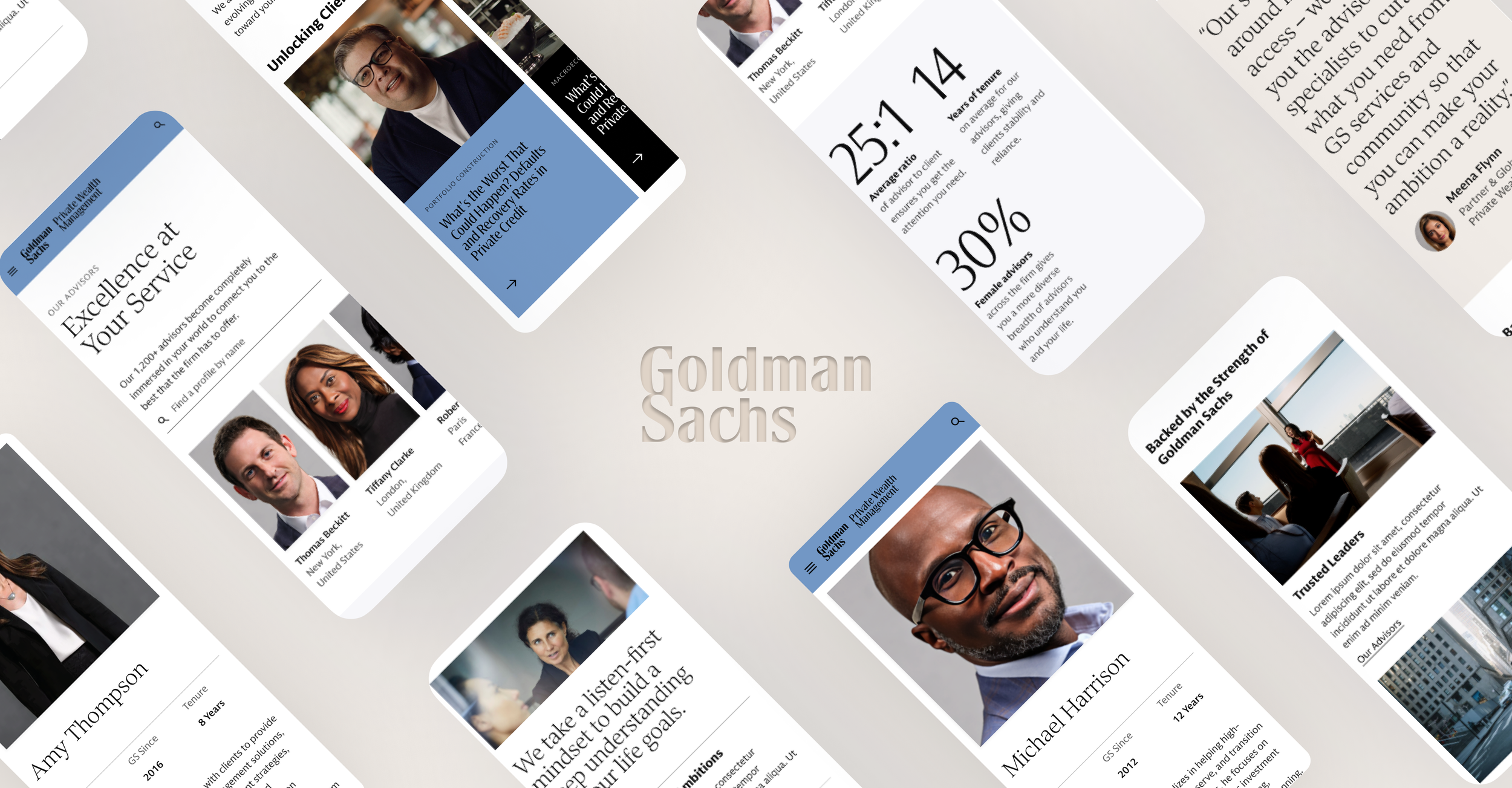
An emotive and elevated advisor page
Our vision was to help Goldman Sachs redefine the digital experience of Private Wealth Management by humanizing the firm and appeal to the emotional decision-making process of HNW clients. We aimed to transform the website into a personalized, emotive experience that would not only address the core functional and informational needs of the site, but also create an engaging and warm environment that would foster trust and relatability.
SOLUTION
Key features
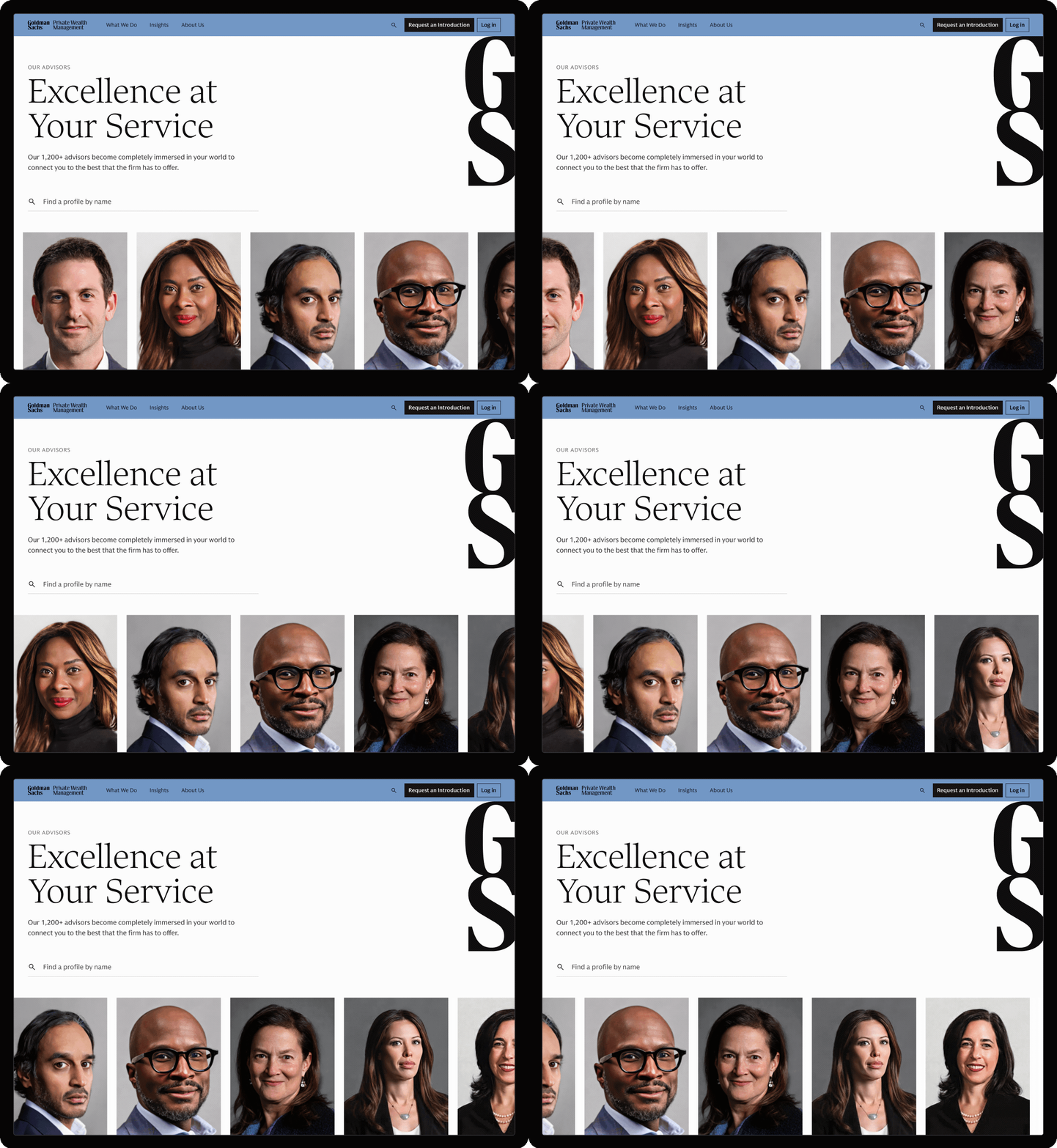
Humanizing the firm with advisors
Use advisor images and profiles to create a more emotive and engaging experience that allows potential clients to foster trust and reliability.
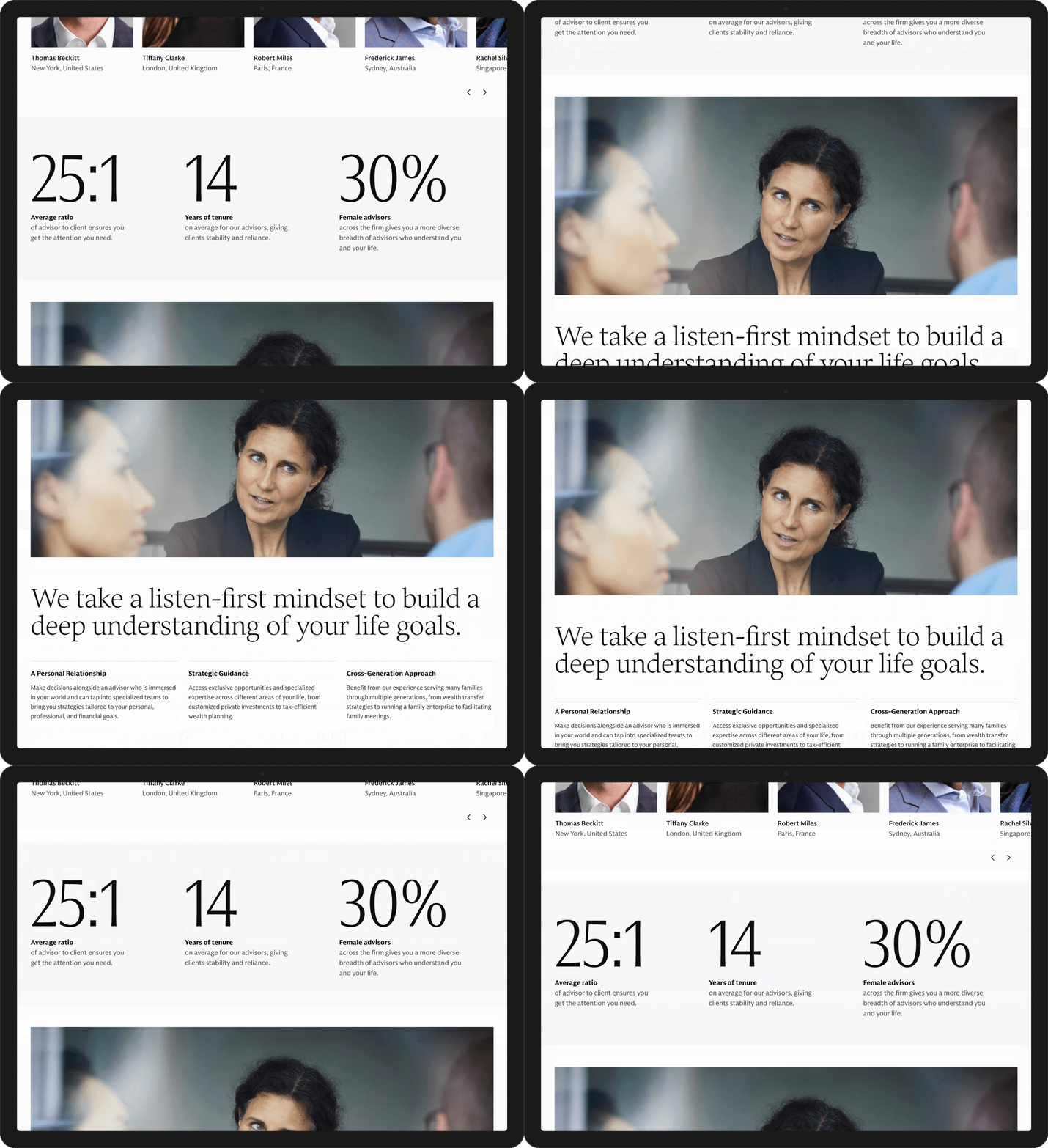
Highlighting differentiators from competitors
Using specific, differentiating statistics to distinctly show why Goldman Sachs is different from other firms, rather than providing the same generic language competitors use.
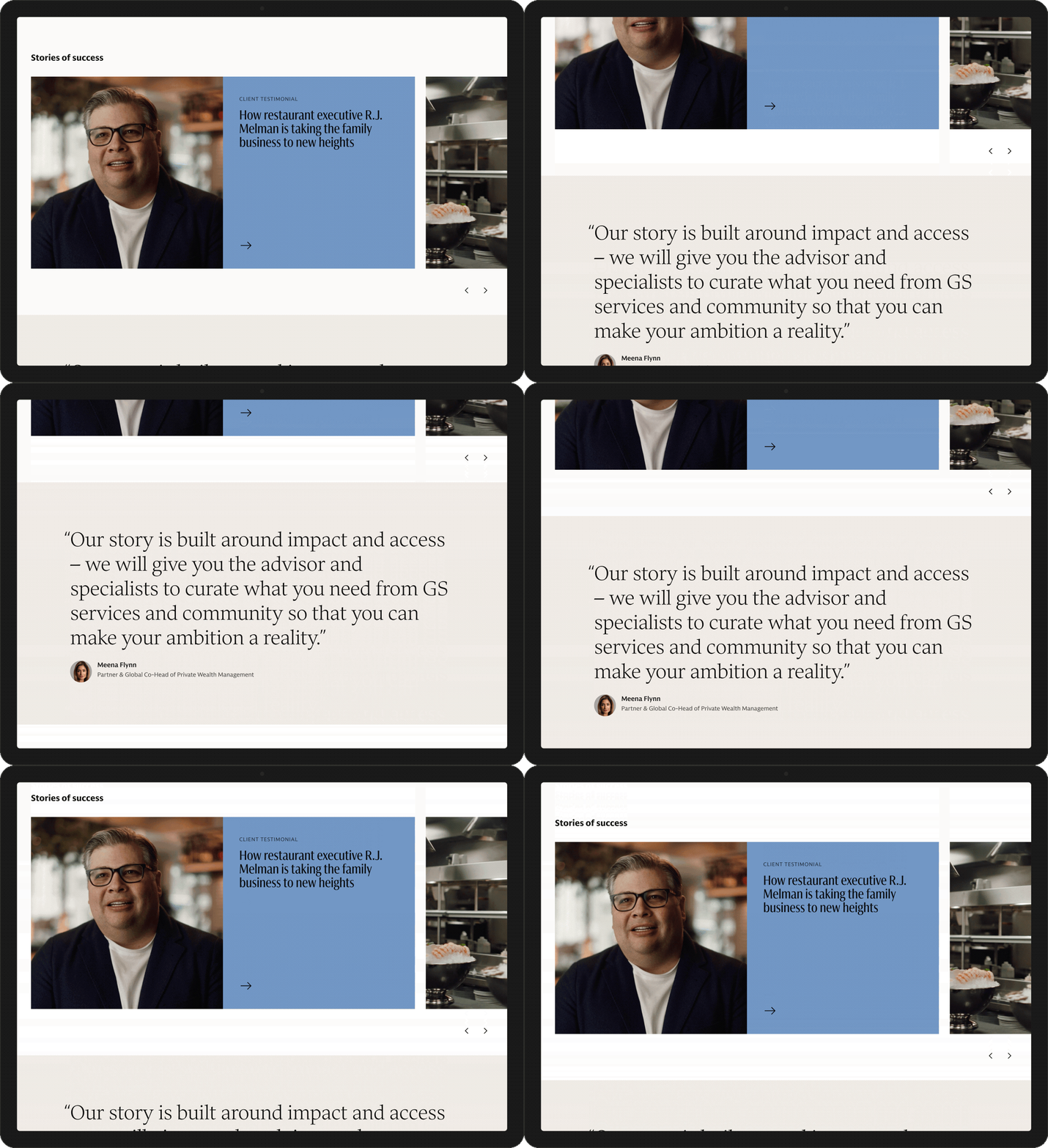
Narrative-driven storytelling
Show success stories and quotes from real clients to engage potential clients, allowing them to connect with the story and values of Goldman since they’ve already done the quantitative research.
OUR APPROACH
Design process overview
PHASE O1
Understanding
We began by interviewing 50+ PWM executives and 14 HNWI users to gain an understanding of how we can balance stakeholder objectives with user needs. We also assessed 240 webpages and >30 competitor experiences to identify current pain points.

Stakeholders interviewed

Competitors reviewed

Webpages accessed
INTERVIEW ANALYSIS
Key themes from GS stakeholders
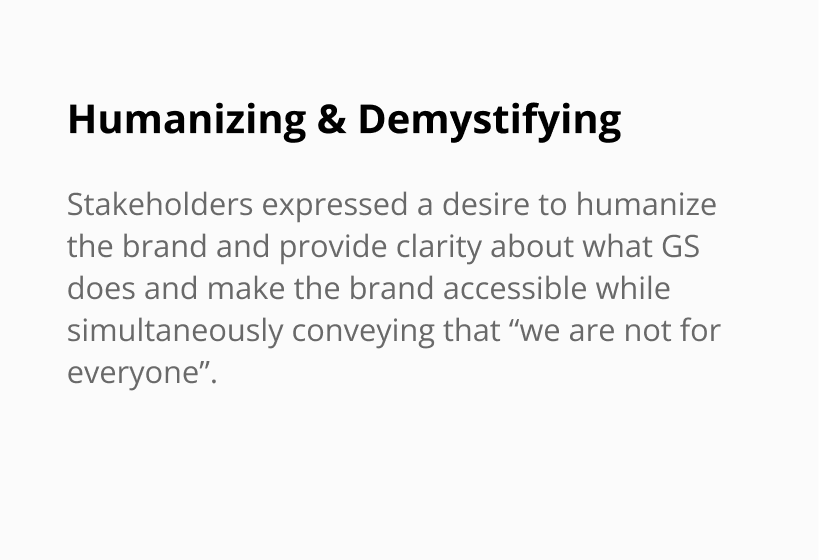
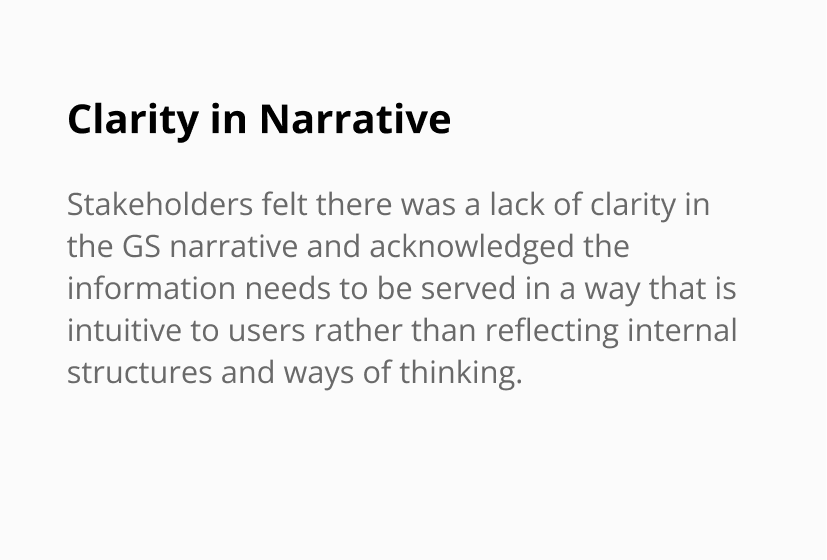
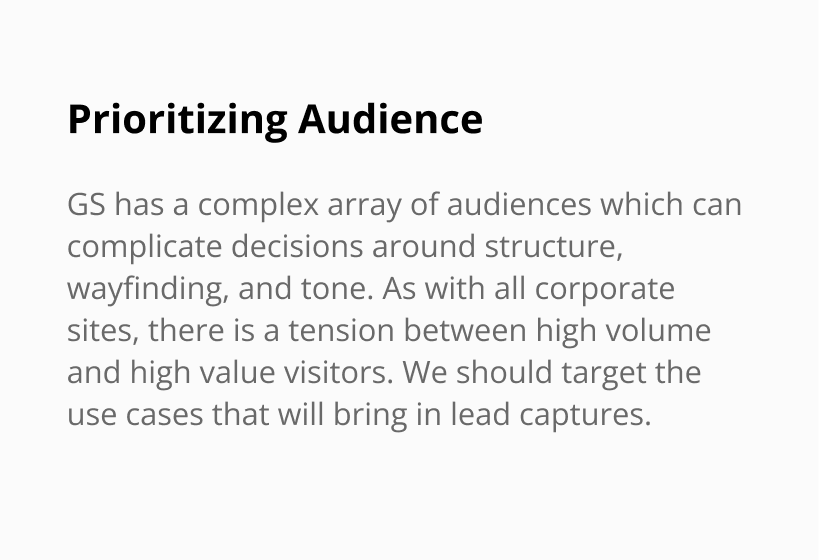
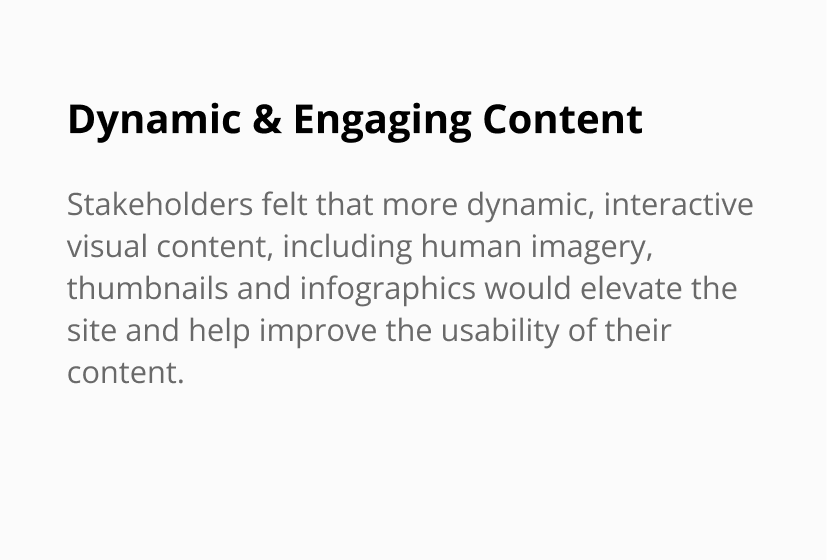
We began by interviewing 50+ PWM executives and advisors in 7 regions on the key goals they were looking for in their rebrand, grouping them into four key themes focused on humanizing the brand and delivering a clear narrative.
INTERVIEW ANALYSIS
Key themes from high-net-worth users
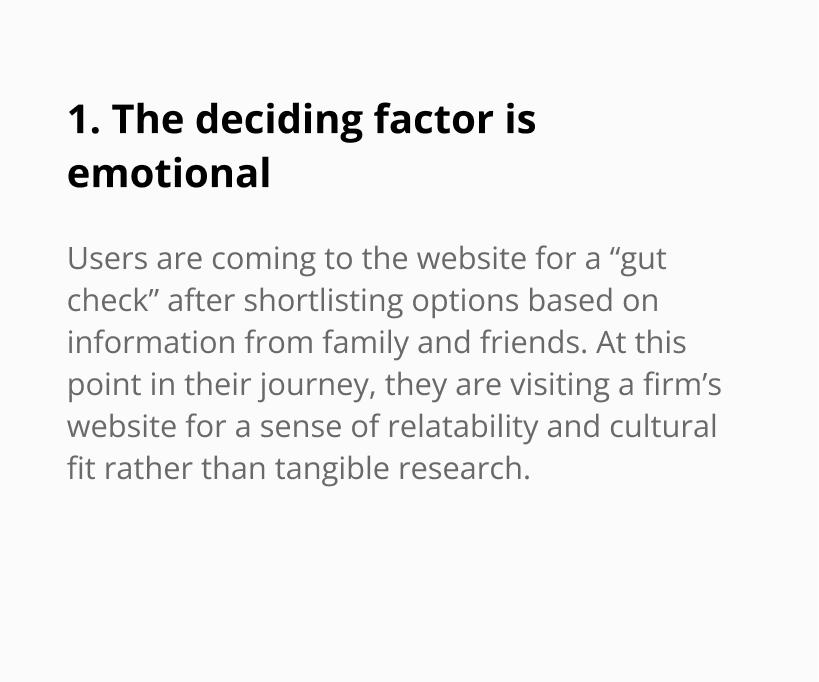
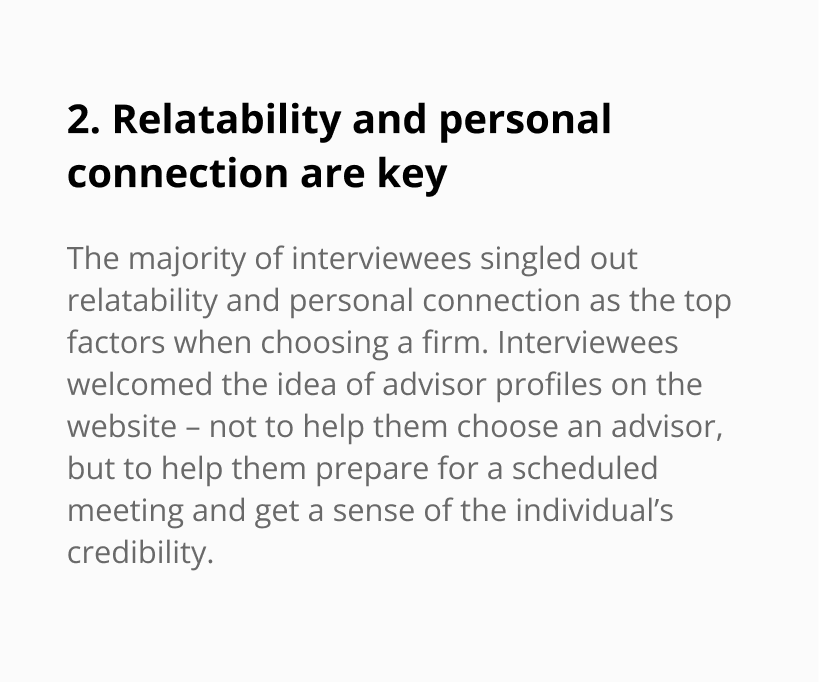
We interviewed 14 HNWI users, with 9>$10M, 5 <$10M imminent qualifers. We found that users are looking for emotional validation, personal connection, and relatability over tangible research.
KEY INSIGHT 1
HNWIs shared that the deciding factor was always emotional: a feeling of reassurance, cultural fit, and being able to relate to the firm.
USER GOALS
Mapping the user journey
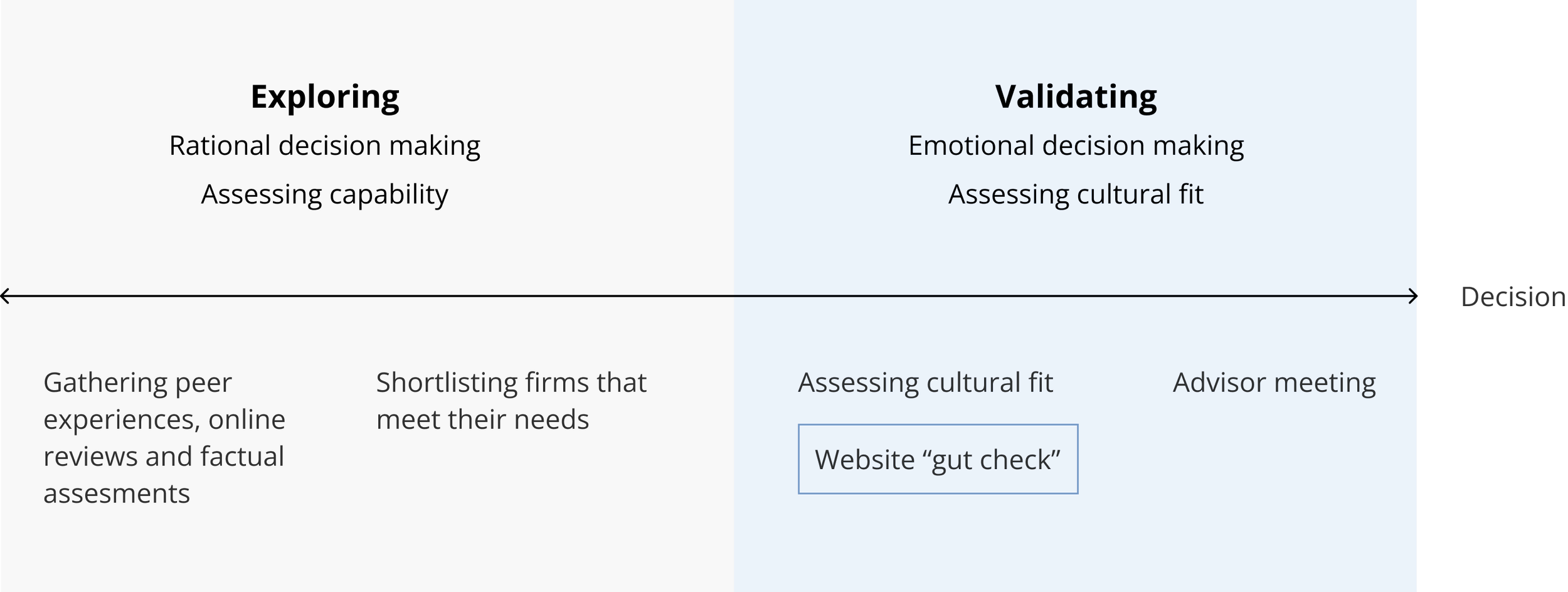
From our interviews, we quickly mapped out the user journey to understand at what point HNW and UHNW individuals were going to the website to understand what exactly they would be looking for when visiting. We split the journey into two areas:(1) exploring the options they have and (2) validatinga shortlisted set of options before making their final decision.
Phase 1: Exploring
We found that the rational, research-based decision making comes primarily from trusted sources who know them personally (family, friends, and colleagues), because those individuals understand their personality and situation.
Phase 2: Validating
After getting recommendations and shortlisting firms, they move onto the validating phase by visiting advisor's websites, not for detailed research, but to gauge emotional resonance and cultural fit. Currently, the PWM website falls short in this area because it feels impersonal and lacks the warmth and human touch that clients look for in a trusted advisor. Without features like advisor bios or personal stories, it's hard for potential clients to form a connection.
KEY INSIGHT 2
HNWIs are coming to the website for a final validation after already shortlisting firms from peer recommendations and objective assessments.
CONSOLIDATING INSIGHTS
Identifying opportunities
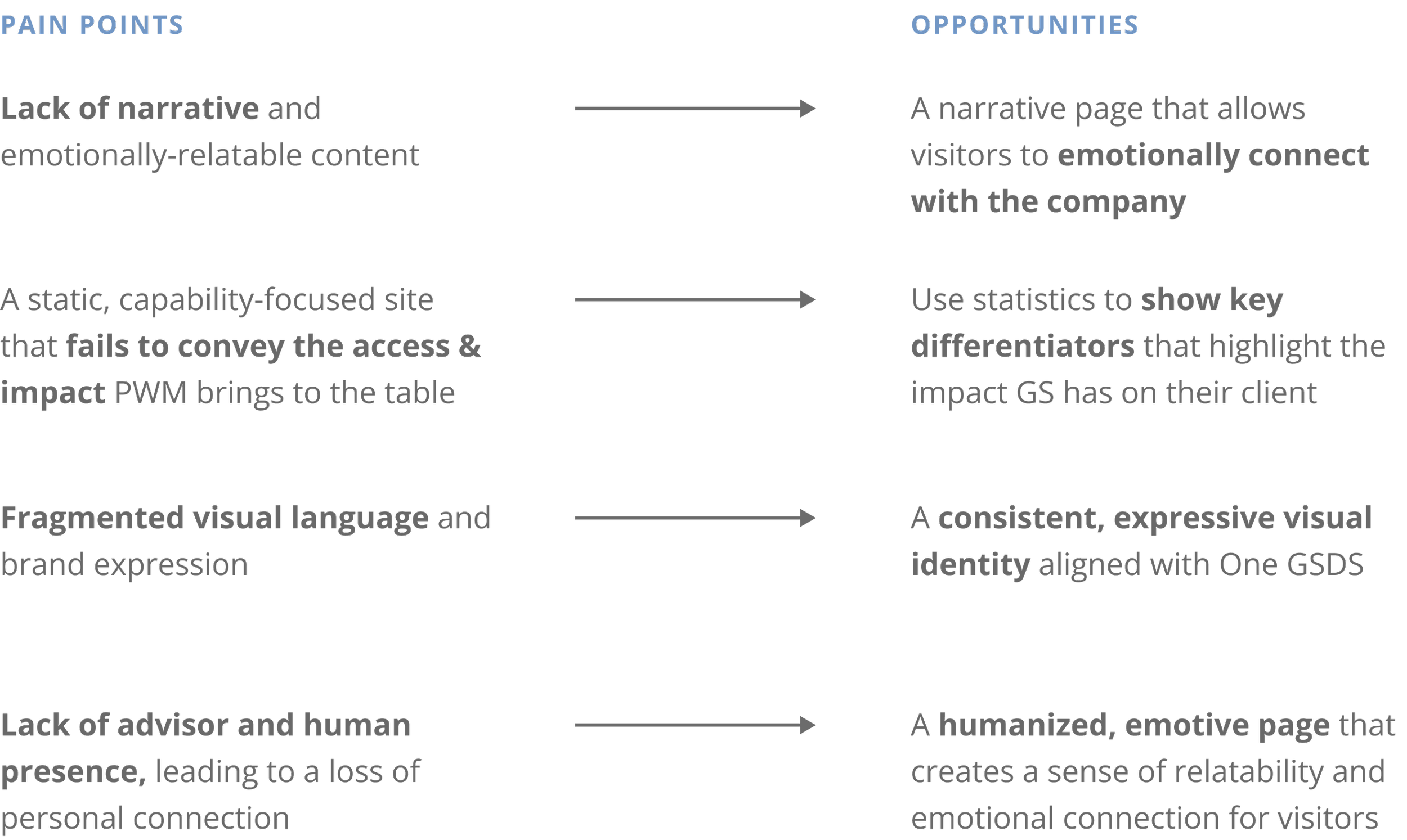
Both GS stakeholders and HNWI users emphasized the importance of human and emotional connection. Based on interviews with both of these groups, we consolidated the key pain points we were hearing from both sides, and identified corresponding opportunity areas to address them.
—
PHASE 02
Designing an advisor page
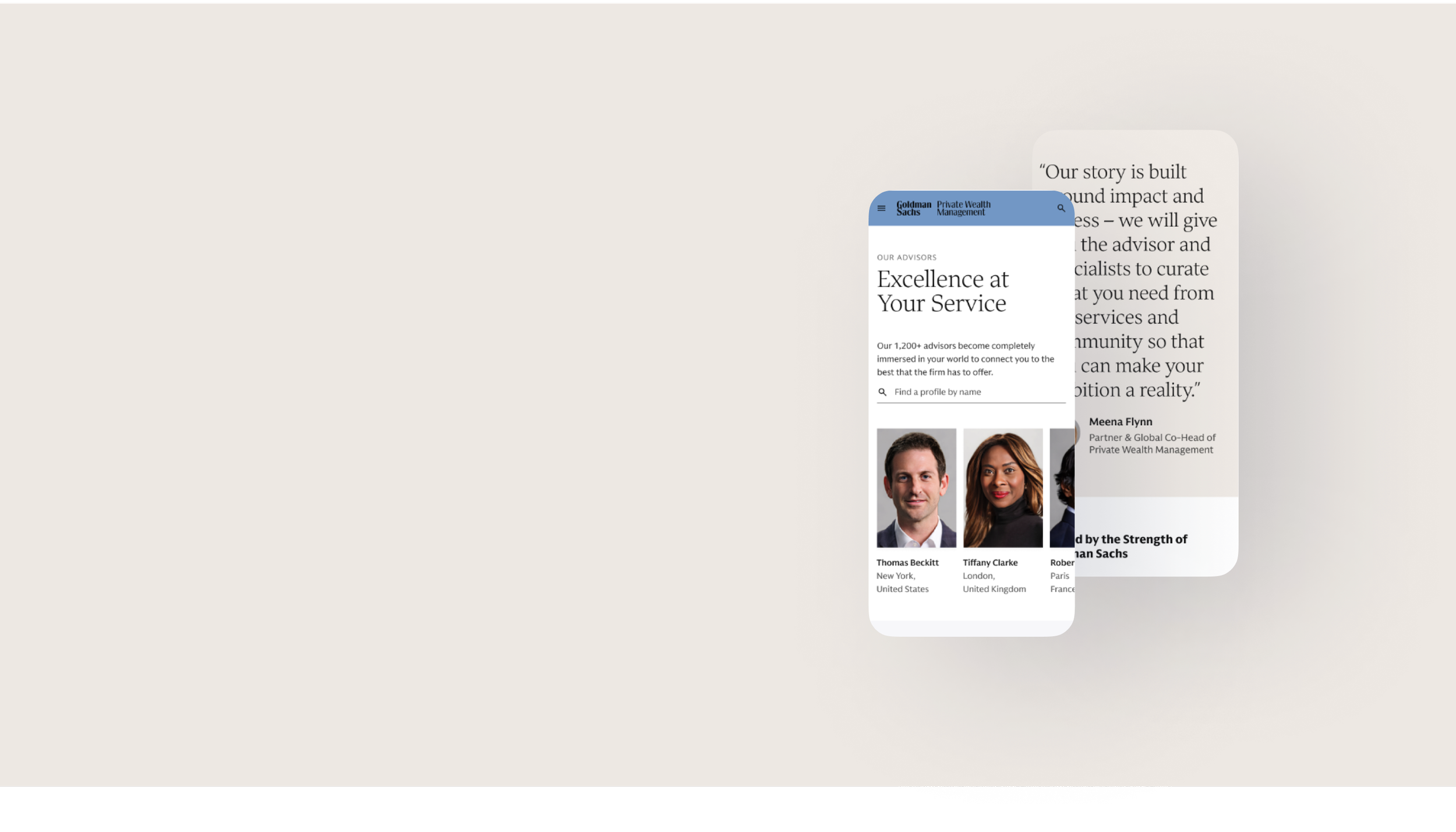
We proposed designing a net new advisor landing page in order to address the key pain points of a lack of human relatability and narrative content. By highlighting the people and story of the firm, we would create the emotional connection necessary to drive client aquisition at this point in their decision-making process.
I led the end-to-end design process for this page from scratch, from devising a strategic approach, to the development of exploratory wireframes, to the high-fidelity prototypes that were met with enthusiasm from the clients.
DESIGNING
Approach to concept exploration
After aligning on objectives, we wanted to explore a range of approaches to (1) align on what would help achieve our user’s needs and (2) deepen understanding of our stakeholders’ vision. We used low-fidelity exploration of these approaches to ensure alignment, gather early feedback, and quickly iterate on options before diving into more detailed designs.
DESIGNING
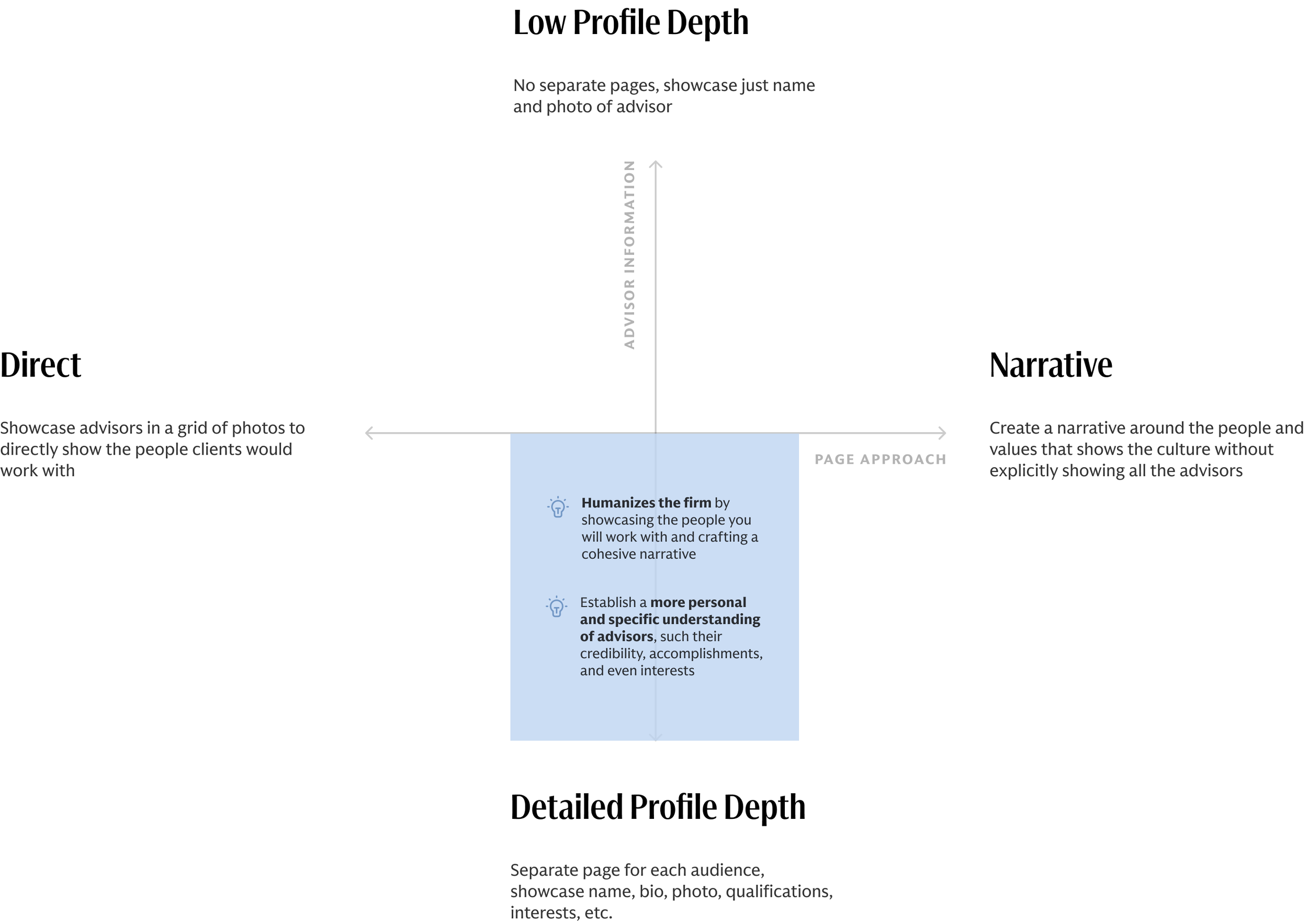
1. Page approach
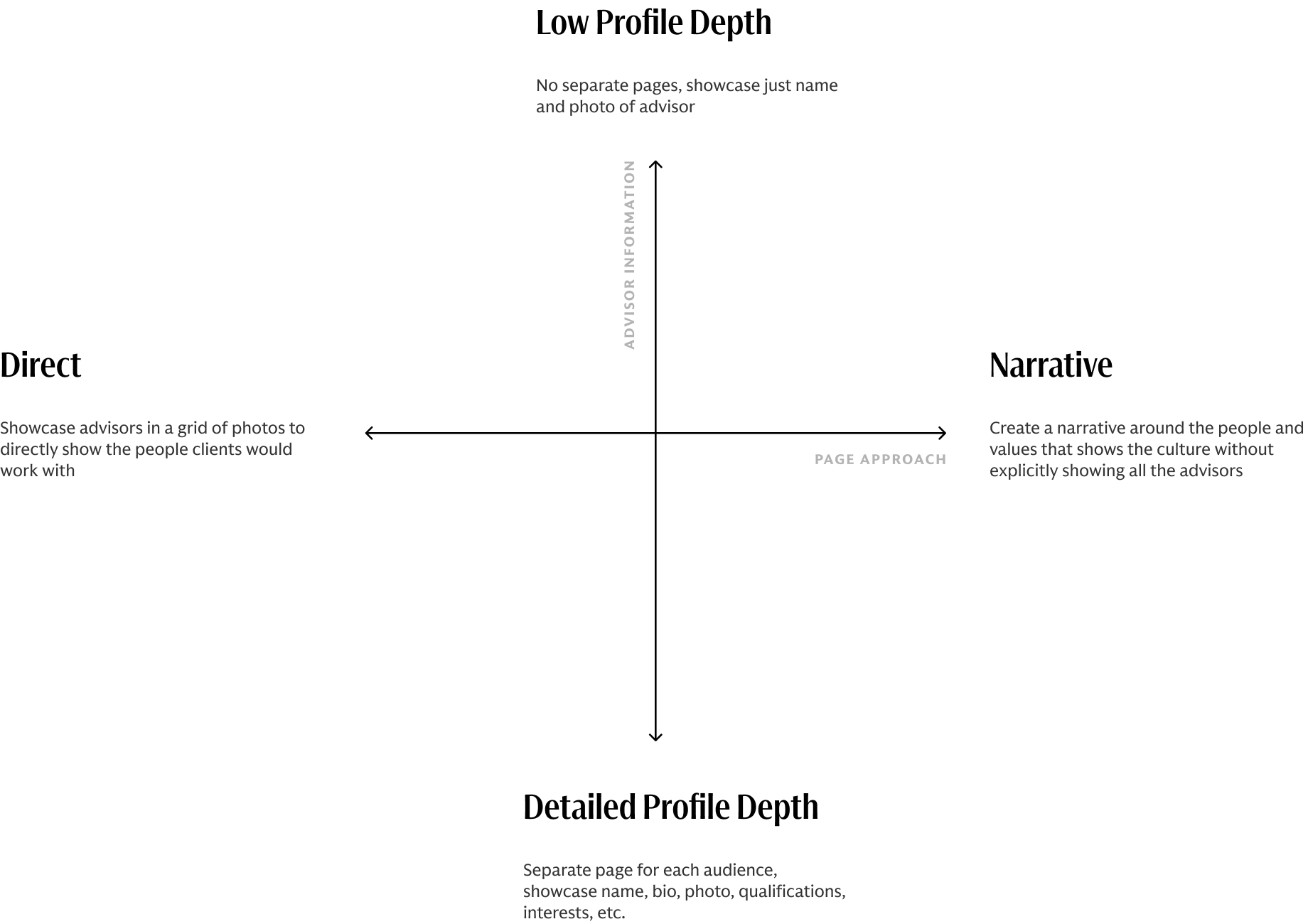
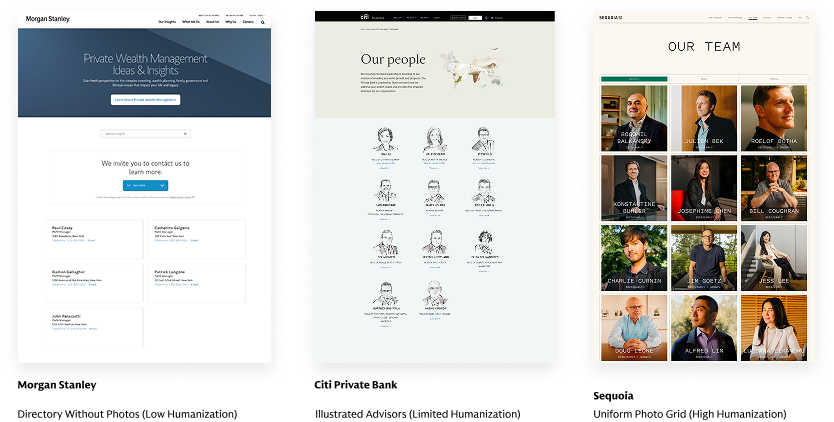
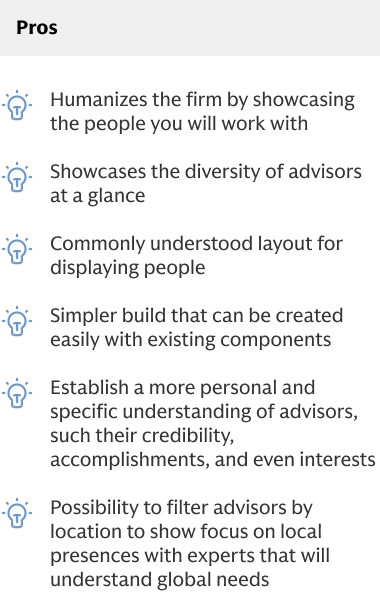
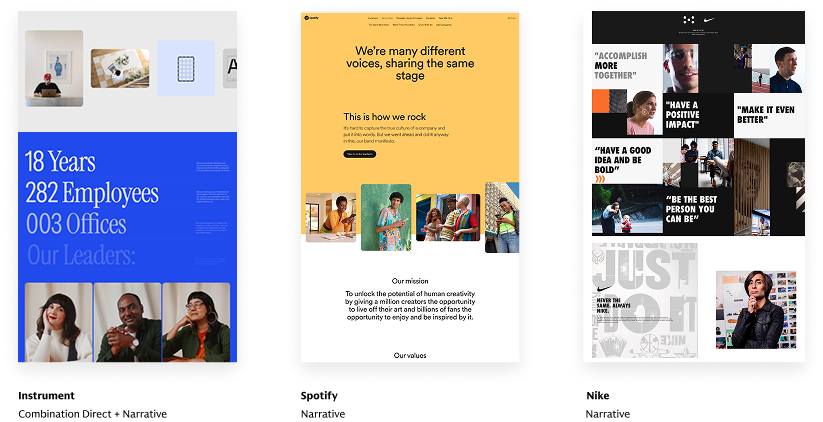
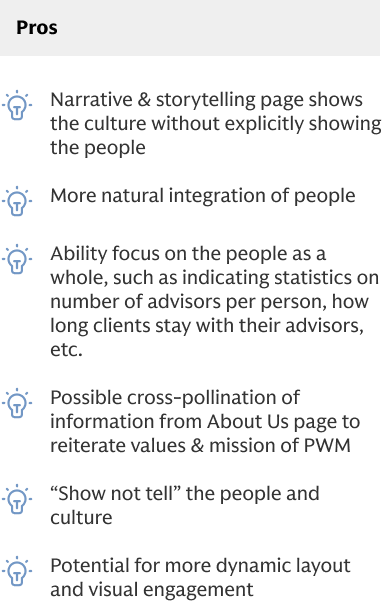
We created a scale from (1) directly showing advisors to (2) focusing on a narrative-based approach that showed the culture and values without individual advisors, and presented it to the client to align on what would be most effective and feasible. We began by showing the clients industry examples on both sides of the scale, highlighting the strengths and weaknesses of each approach to help determine what would be the best fit for Goldman Sachs.




RECOMMENDED APPROACH
We recommended an approach in the middle, and aligned on the 80% Direct, 20% Narrative direction.
From these competitive examples, we also quickly mocked up some low-fidelity screens to visually express what the advisor page could look like at different points on this scale. We recommended an approach in the middle, and aligned on the 80% Direct, 20% Narrative direction to showcase a directory of advisors and highlight the people, while also telling a story about the brand as a whole. This balance of narrative would allow us to highlight a story around GS differentiators and values, while also allowing users to directly see and browse the advisors they would be working with, ultimately creating a more emotive, humanized experience.
DESIGNING
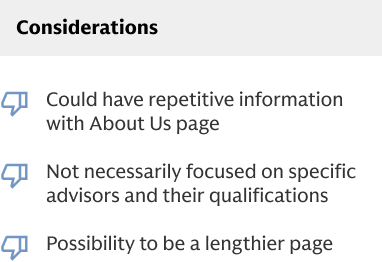
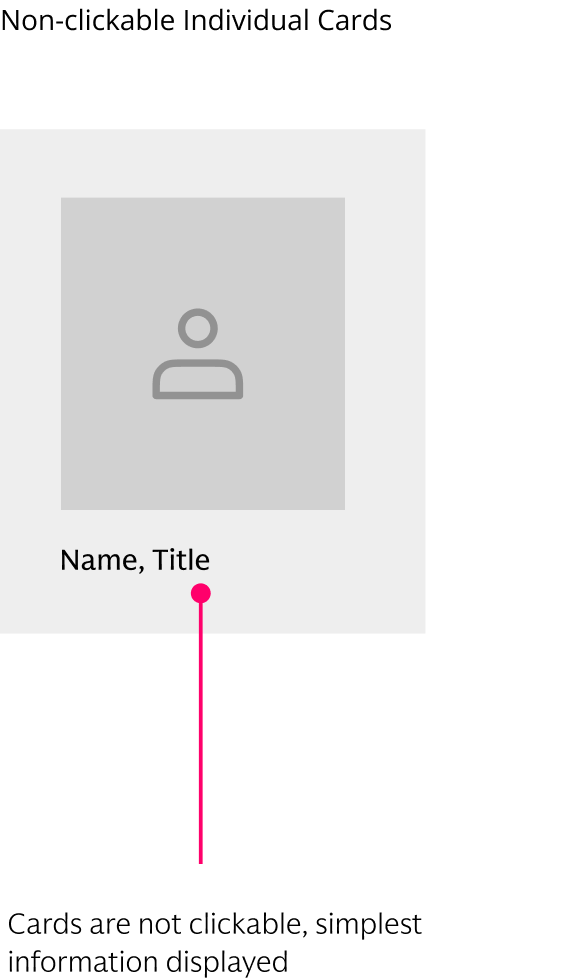
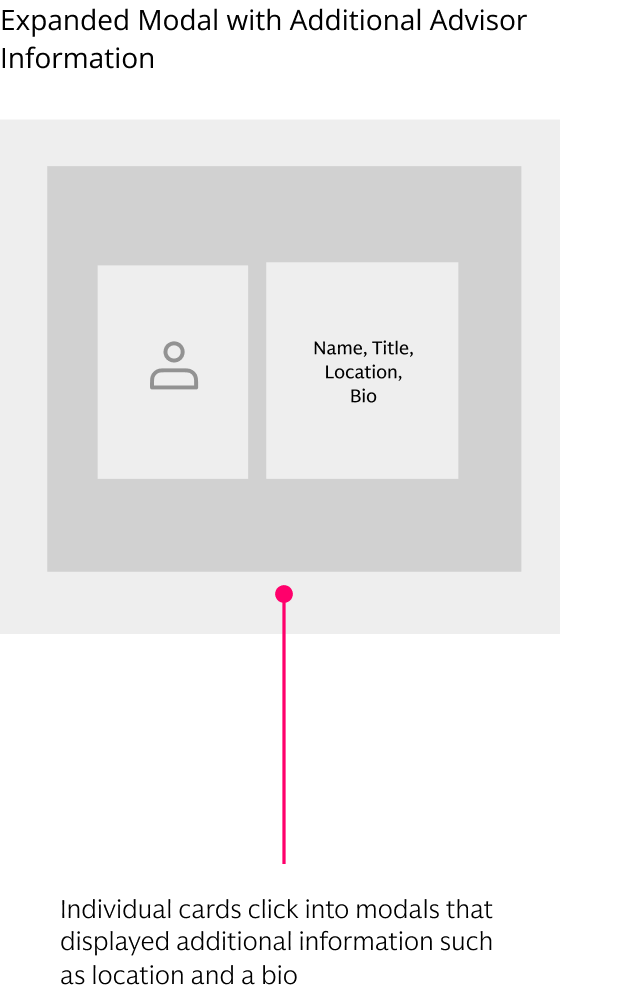
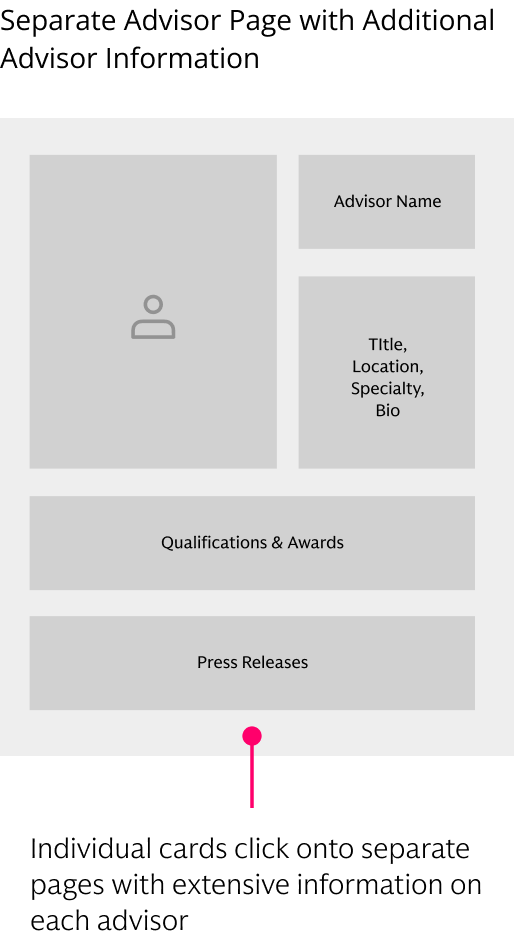
2. Advisor presence
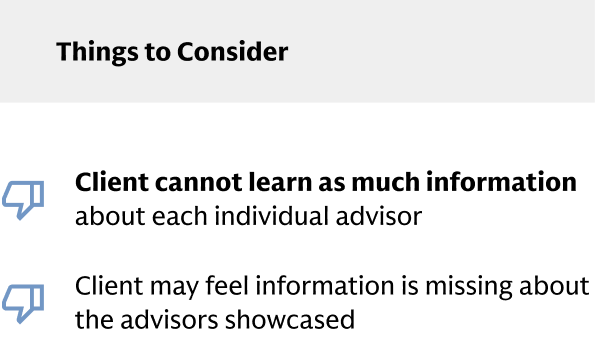
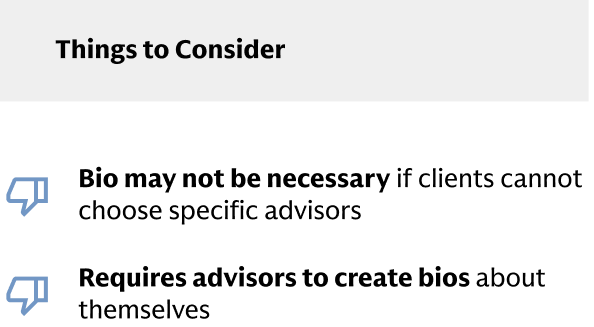
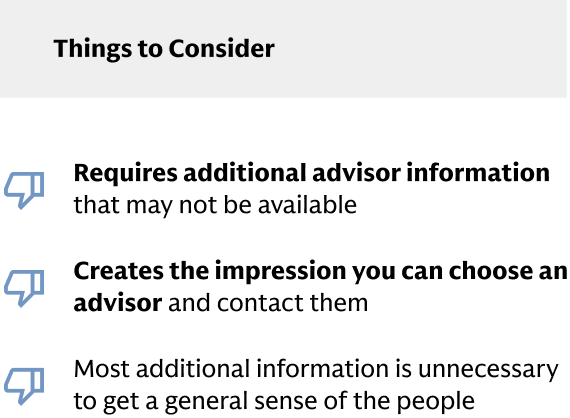
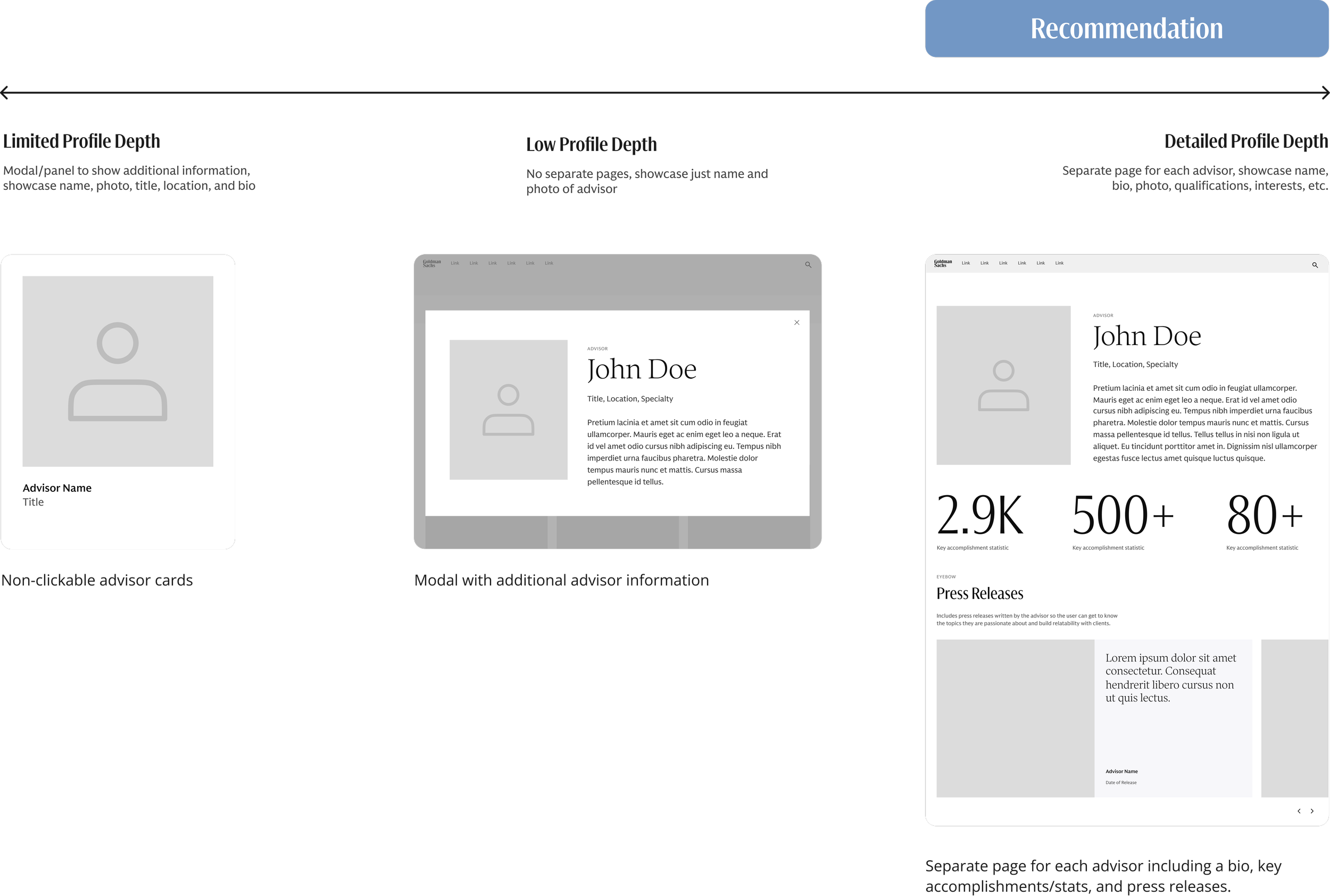
Aside from page approach, the second scale we wanted to align on was the amount of advisor presence on the website. We were aware that GS was wary about putting too much information about each individual advisor on the website since (1) it could give the impression that you could choose and advisor and (2) it could lead to excessive outreach towards advisors if too much contact information is disclosed.






RECOMMENDED APPROACH
We recommended an detailed profile depth for each advisor.
A detailed advisor profile helps clients better understand each advisor’s expertise and personality, creating a more personal connection while humanizing the firm.
CHOSEN APPROACH
Our clients aligned on using a combined direct-narrative approach with a detailed profile depth for each advisor.
We would need to consider striking a balance between showcasing the actual advisors clients would work and crafting a cohesive narrative around the culture of the firm as whole.
DESIGNING
Iterating
After aligning on chosen direction with the Goldman clients, we did another iteration of our preliminary wireframes, keeping in mind the opportunities we discovered for more emotional connection and differentiation from competitors.
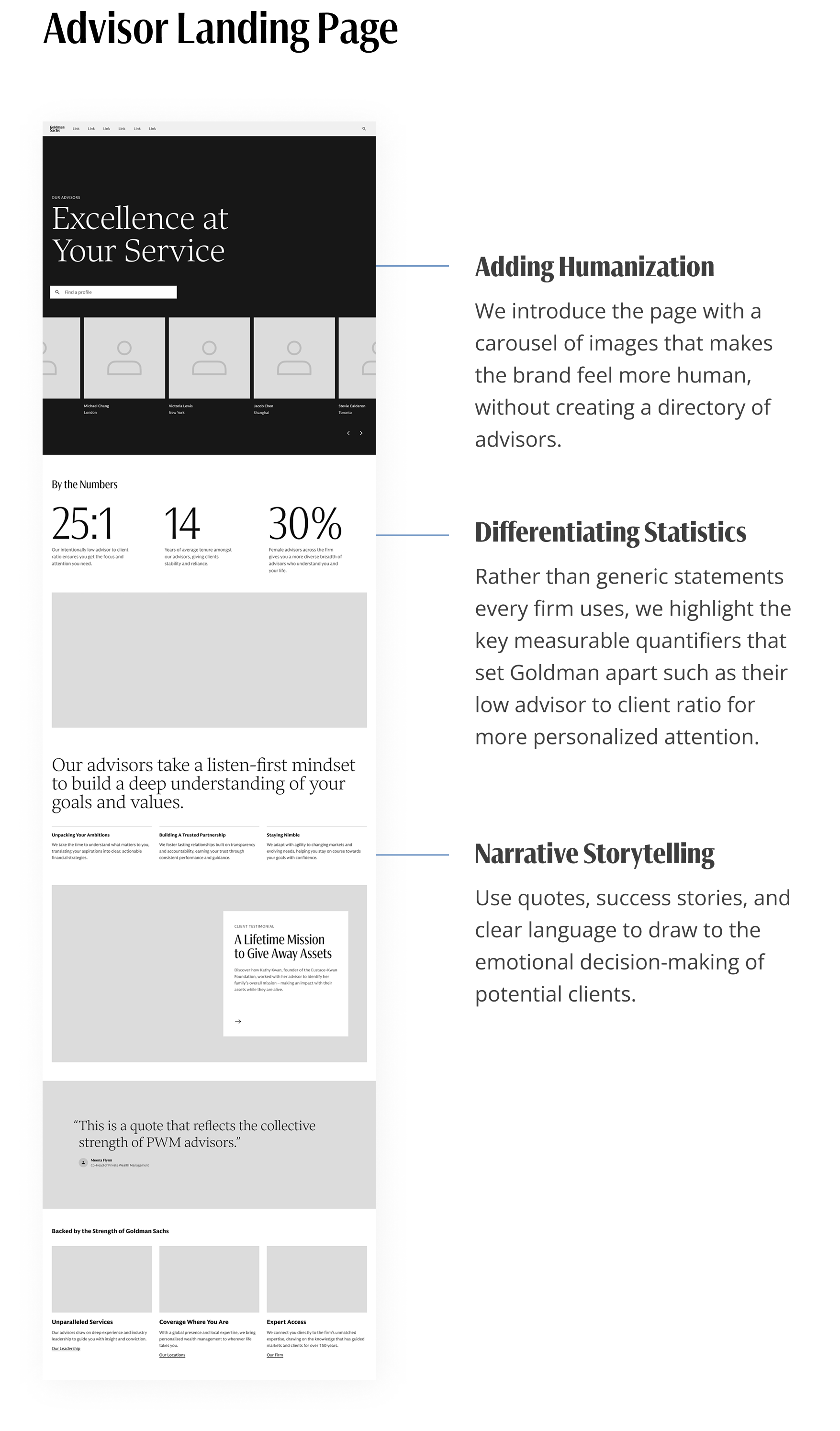
1. Advisor Landing Page
We refined the concept with stakeholder input on the actual content including key differentiators, value propositions, statistics, and placeholder stories. One of the key design changes we added was a rotating carousel of advisors creating a more space-efficient and visually engaging way to highlight advisors at the top of the page.
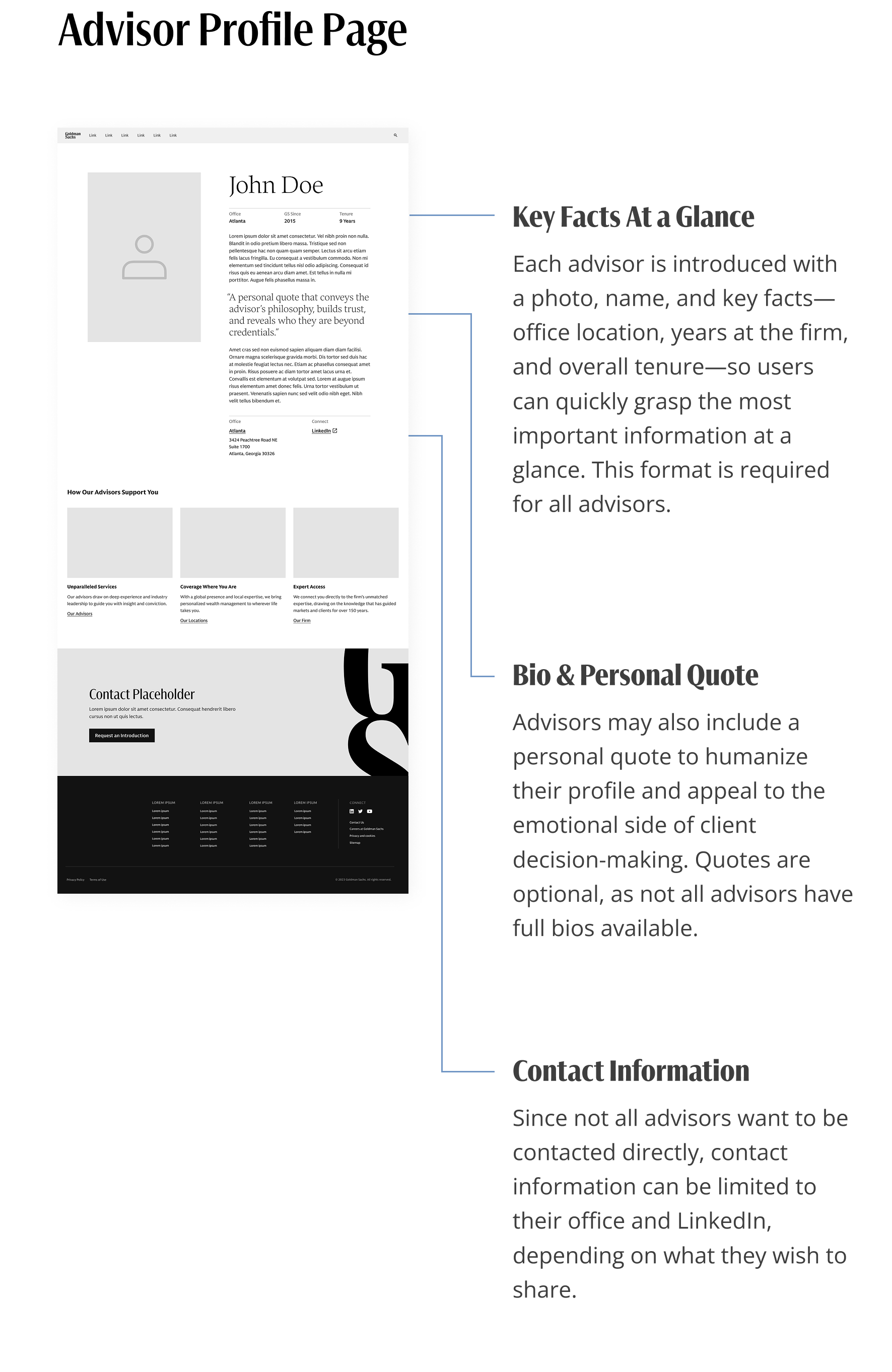
2. Advisor Profile Page
After aligning on the depth of each advisor profile, we worked with stakeholders to define the key information for the MVP, including office location, years at the firm, and overall tenure. Additional elements such as a bio, personal quote, or contact information can further humanize the advisor and provide richer context. However, since this information is not consistently available across all advisors, these elements are considered optional for the MVP.
DESIGNING
High fidelity designs
After aligning with Goldman clients on the mid-fidelity page structure, we collaborated with the content team and client stakeholders to incorporate real advisor profiles and content into the design. At the same time, we began developing additional states of each page to capture more complete user scenarios. The designs were well-received by the client and subsequently handed off to development for implementation.
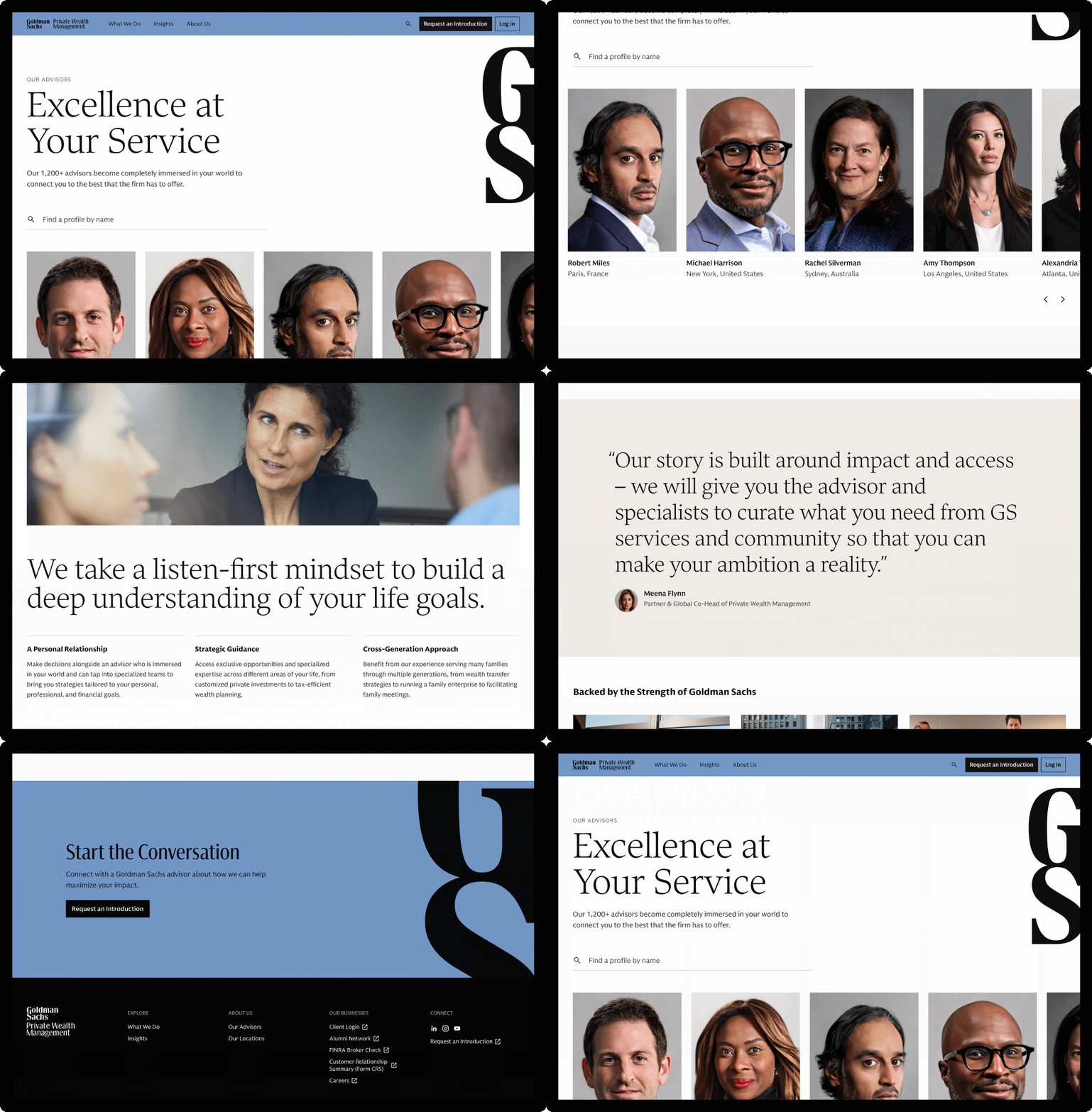
Advisor Landing Page
From the mid-fidelity design, we added in real advisor profiles, refined the language, and added multiple client success stories to deliver a more refined experience.
Advisor Profile Page
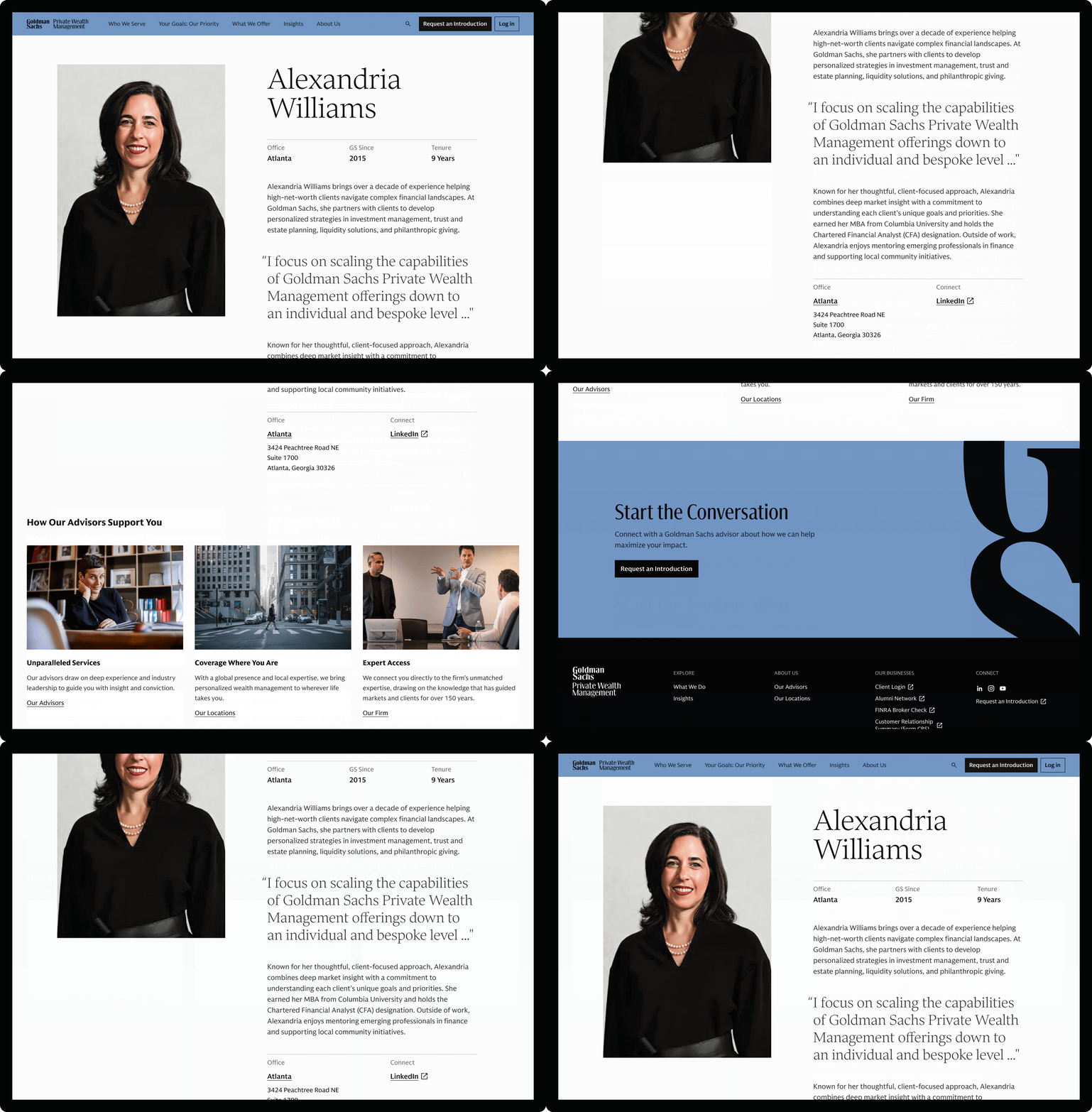
From the mid-fidelity wireframe, we added an example profile from Alexandria Williams to test how real content integrates with the design and to validate the structure.
DELIVERING
Final design
Our net new Advisor Landing Page for PWM highlights the people of the firm and uses narrative-based storytelling to cater towards the emotional decision-making process of potential clients to ultimately drive customer aquisition for Goldman Sachs.
SOLUTION
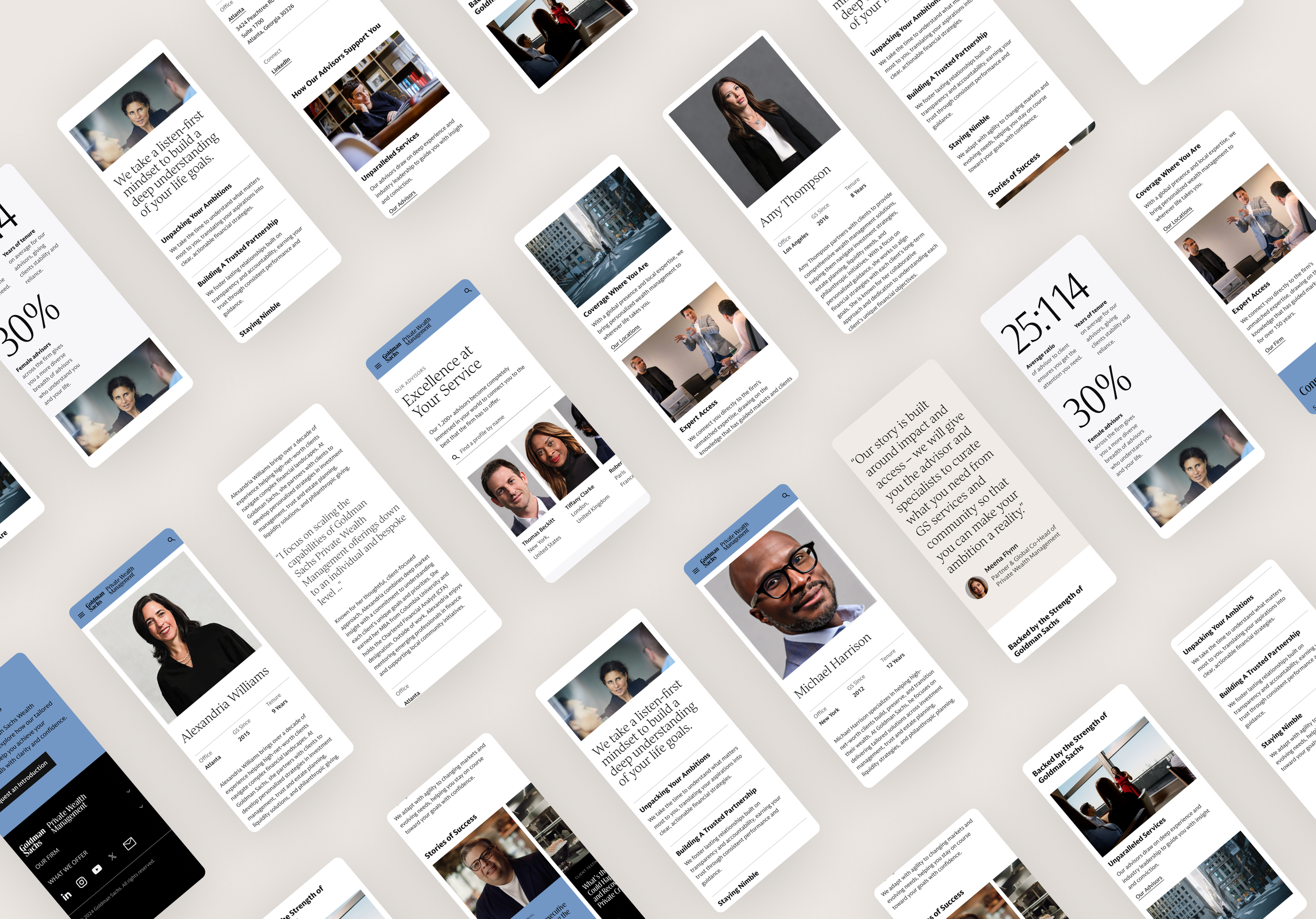
An advisor landing page that creates a more humanized and engaging experience, appealing to the emotional-deciding factor of HNW individuals and ultimately drive lead captures.
Our vision was to help Goldman Sachs redefine the digital experience of Private Wealth Management by humanizing the firm and appeal to the emotional decision-making process of HNW clients. We aimed to transform the website into a personalized, emotive experience that would not only address the core functional and informational needs of the site, but also create an engaging and warm environment that would foster trust and relatability.
FINAL DESIGN
Key features
FEATURE 1
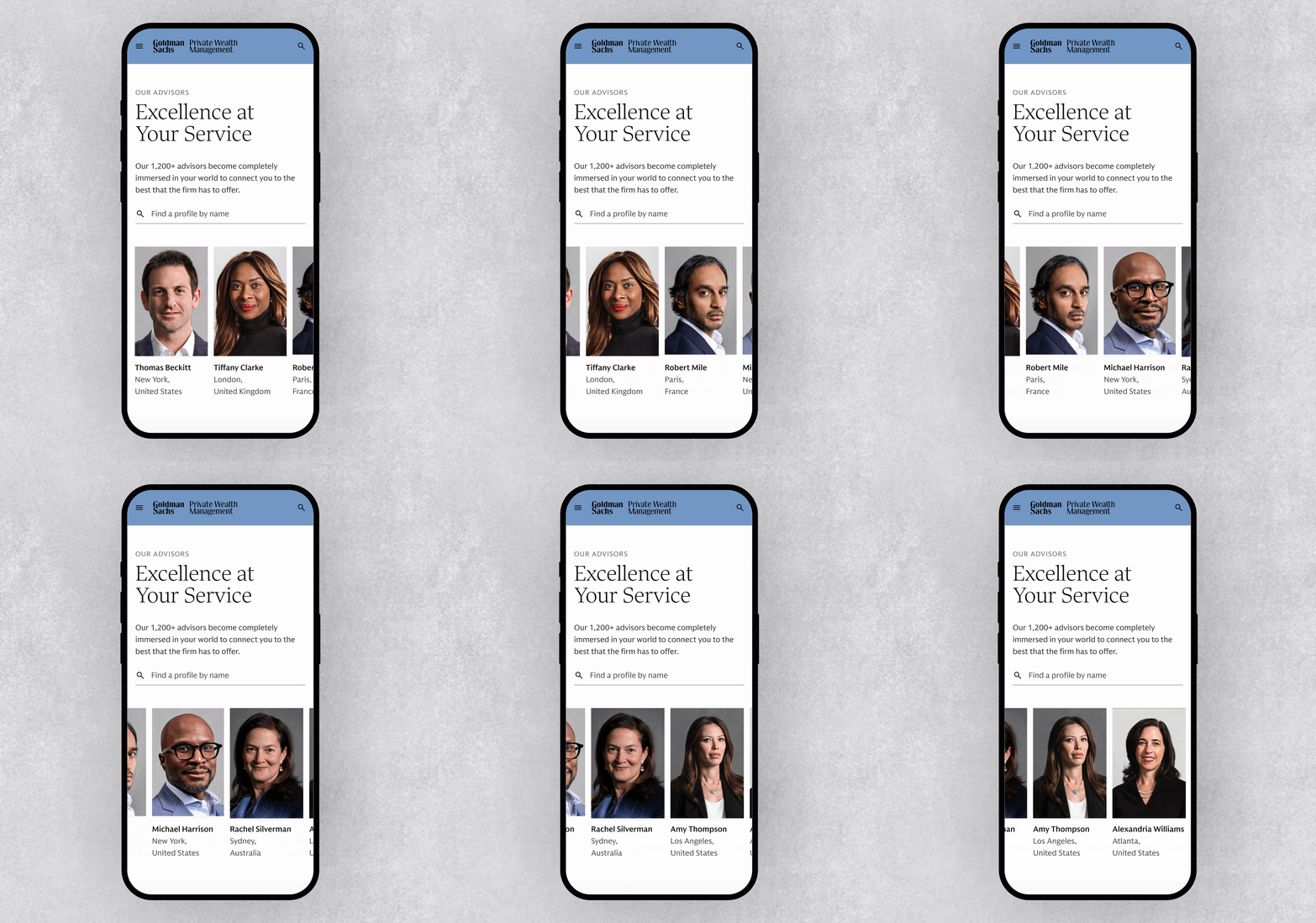
Humanizing the firm with advisors
Use advisor images and profiles to create a more emotive and engaging experience that allows potential clients to foster trust and reliability.
FEATURE 2
Highlighting differentiators from competitors
Using specific, differentiating statistics to distinctly show why Goldman Sachs is different from other firms, rather than providing the same generic language competitors use.
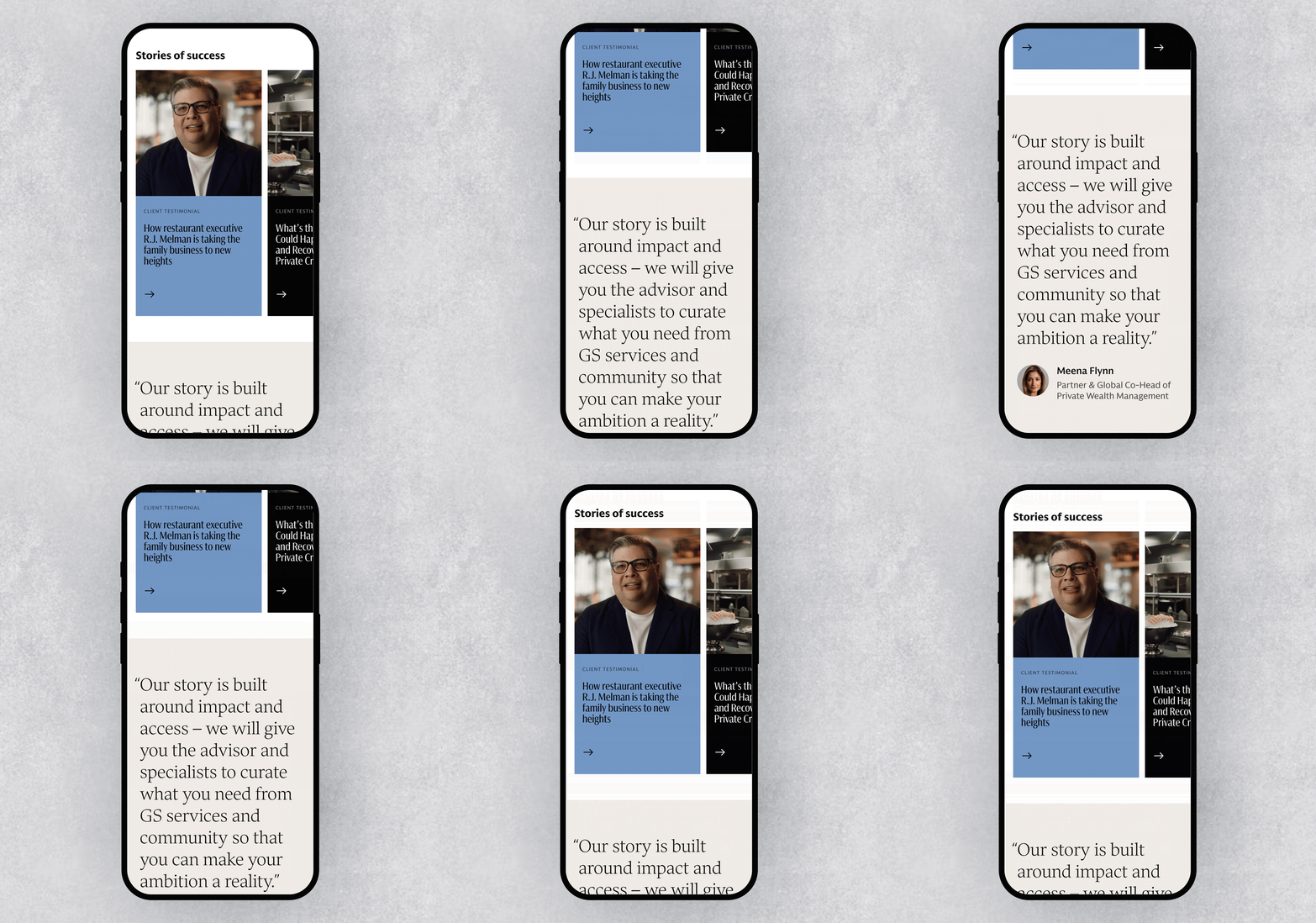
FEATURE 3
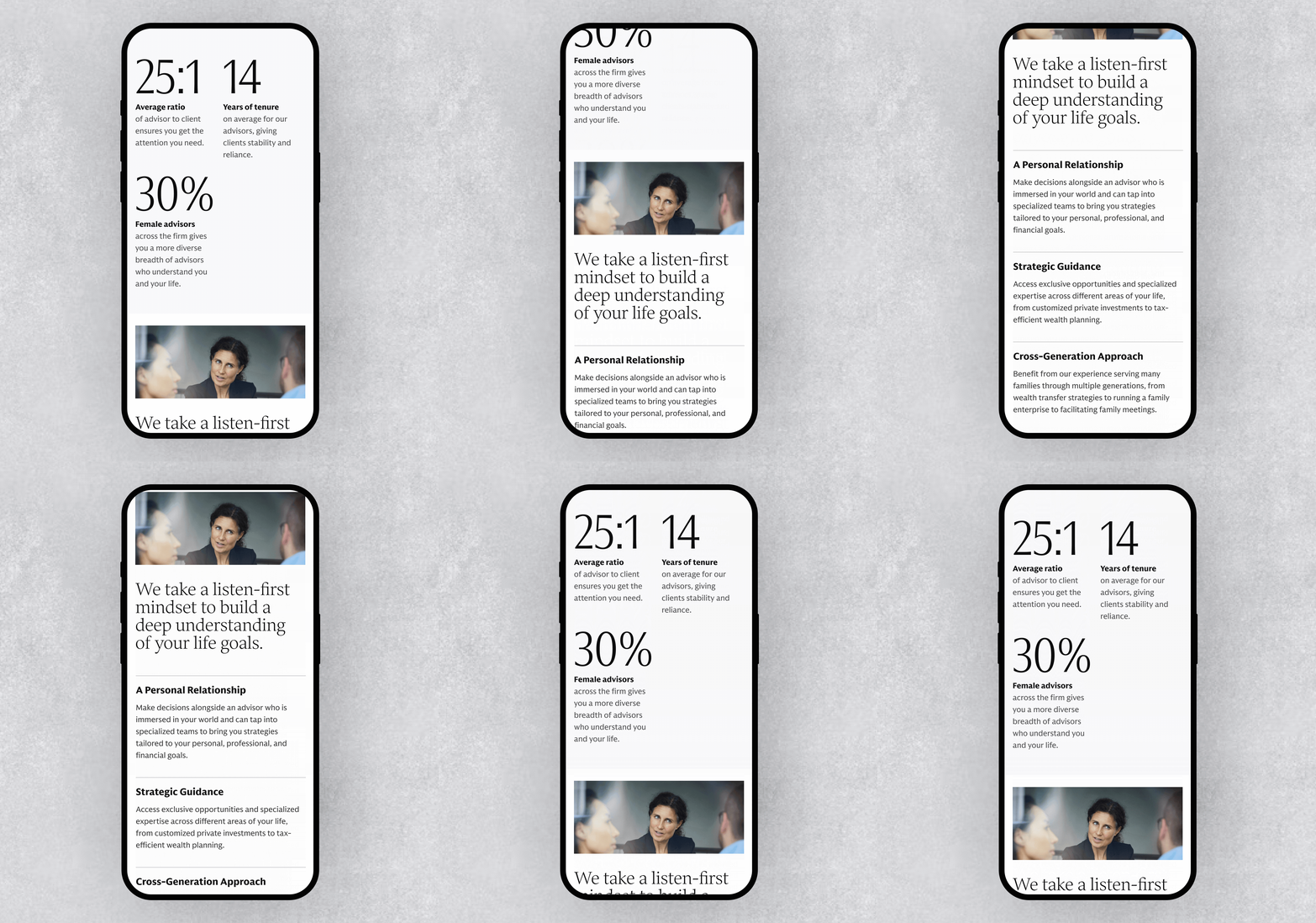
Narrative-driven storytelling
Show success stories and quotes from real advisors to engage potential clients, allowing them to connect with the story and values of Goldman once they’ve already done their quantitative research.
CONCLUSION
Benefits of the new advisor landing page
The redesigned Advisor Landing Page elevates Goldman Sachs PWM’s digital presence by creating a more human, engaging, and emotionally resonant experience for prospective clients.
FUTURE STEPS
Evaluating and testing the system
Due to time constraints, our team designed an MVP based on initial stakeholder and user interviews. With more time, I would further evaluate how users respond to the redesigned page in areas such as emotional engagement, conversion, and differentiation. Key questions include:
Do users feel more connected to the firm through advisor profiles, testimonials, and cultural storytelling?
Do advisor profiles increase trust and confidence in reaching out?
Does the page improve conversions and clearly communicate next steps?
Is the value proposition compelling and differentiated from competitors?
Does the site effectively communicate Goldman Sachs’ reputation, personalization, and client focus?
Given more time, I would use a combination of quantitative metrics (such as conversions, advisor profile clicks, and consultations booked) and qualitative feedback (including trust, emotional engagement, and perceived personalization) to better understand user behavior and continue refining the design.
REFLECTIONS